Casteism: Is the Constitution or Sanatan to Blame?
Nov 6, 2026, 17:30 IST
Summary
The debate over casteism in India features contrasting views from Sandeep Deo, who blames the Constitution for entrenching caste identity, and Sanjay Dixit, who argues that Brahminism is a fabricated narrative. Deo highlights the historical flexibility of caste in Sanatan traditions, while Dixit critiques the political use of caste narratives, emphasizing the complexities of modern caste dynamics.
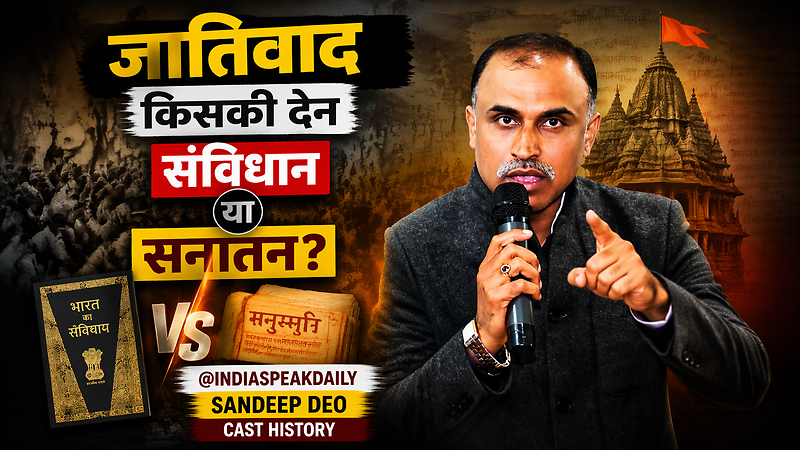
The debate over the roots of casteism in India has intensified, with two prominent voices offering starkly contrasting perspectives. On one side, Sandeep Deo, a popular YouTuber from India Speak Daily, asserts that the Sanatan traditions historically allowed for caste mobility based on individual qualities and work. He argues that caste was never meant to be a hereditary system, stating, 'Sanatan dharm and tradition never sanctioned state-sponsored caste.' Instead, he claims that the modern Indian Constitution has institutionalised caste identity as something hereditary and aggressive, stating that 'the caste consciousness that should have diminished after independence has instead become more entrenched.' Deo points to the 1932 Poona Pact as a pivotal moment that established the constitutional caste structure, which he believes has contributed to the current rigidity of caste identities.
Conversely, Sanjay Dixit from The Jaipur Dialogues offers a radically different perspective. He challenges the notion of Brahminism as a real social phenomenon, suggesting it is a fabricated narrative used to divide society. According to Dixit, 'Brahminism is a fabricated slogan rather than a real social phenomenon,' arguing that it serves as a tool to discredit certain groups while ignoring the complexities of caste dynamics. He claims that even leaders from various backgrounds become 'Brahminist' once they attain power, illustrating the contradictions inherent in the caste system where individuals from all backgrounds, including Brahmins, can occupy various societal roles.
The disagreement between Deo and Dixit highlights a deeper conflict over the interpretation of caste's origins and its current implications. While Deo focuses on the historical roots of caste in Sanatan traditions and critiques the constitutional framework that has perpetuated caste identities, Dixit dismisses the very concept of Brahminism as a political construct. He contends that the real issue lies in the contradictions of caste rather than in any single tradition or constitutional framework.
Despite their differences, both creators acknowledge the complexities of caste in modern India. Deo’s emphasis on the historical context of Sanatan traditions suggests a belief in the possibility of reform and mobility within the caste system, while Dixit’s focus on the narrative surrounding Brahminism implies a critique of contemporary political discourse surrounding caste. Together, their arguments paint a multifaceted picture of casteism in India, challenging viewers to reconsider not only the historical narratives but also the political motivations that shape the discourse around caste today.