Ceasefire at Risk: The Hormuz Flashpoint Debate Intensifies
Nov 1, 2026, 13:30 IST
Summary
The debate over the Hormuz flashpoint reveals deep divides among content creators regarding the precarious ceasefire and failed negotiations. Abhisar Sharma and Ajit Anjum emphasize Iran's control over the Strait and its demands for asset release, while Orya Maqbool Jan highlights military advancements. The potential for conflict remains high as key conditions for negotiations are outlined by multiple voices.
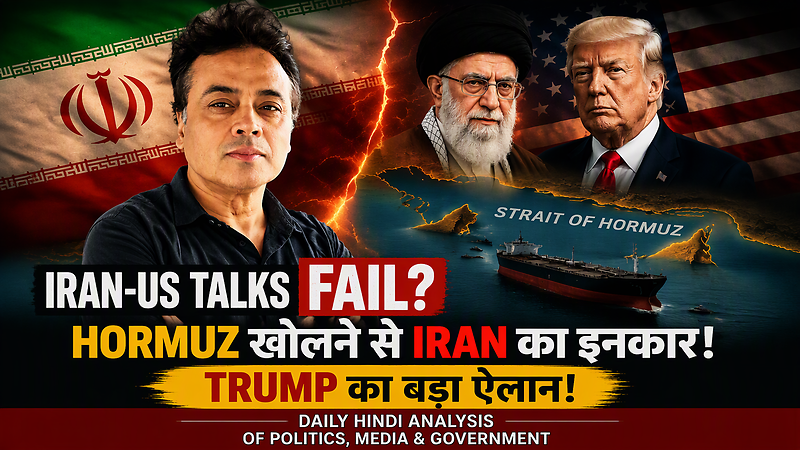
Tensions surrounding the Strait of Hormuz have escalated, with various content creators weighing in on the implications of failed talks and the precarious ceasefire. Popular YouTuber Abhisar Sharma contends that Iran is leveraging its control over the Strait to negotiate the release of its frozen assets. He states, "Iran has total control over the Strait of Hormuz," asserting that it will remain closed until the U.S. complies with its demands. This claim is echoed by Ajit Anjum, who highlights that Iran’s arrangements dictate the Strait's operations, suggesting a failure on Iran's part to uphold prior commitments to ensure free navigation.
In contrast, Orya Maqbool Jan emphasizes Iran's recent military advancements, including the capture of a U.S. underwater drone, which he claims could allow Iran to reverse-engineer technology to enhance its naval capabilities. He argues that this development poses a significant setback to the Pentagon, potentially altering the power dynamics in the region.
The perspectives diverge further with Najam Sethi, who points out that while Iran expects a 60-day period without tolls for ships passing through Hormuz, this could lead to future fees, indicating that tensions may not ease permanently. He suggests that Iran is keeping its options open regarding tolls, a sentiment that aligns with the concerns raised by Khanversation, who argues that U.S. sanctions must be lifted for any meaningful negotiations to occur.
Abhisar Sharma raises the stakes by stating that President Trump has issued orders for potential military action post-midterms if negotiations do not progress. This assertion adds urgency to the situation, as he warns that the U.S. administration appears to be backtracking on earlier commitments to engage with Iran. He quotes Iranian officials asserting that the Strait will remain closed until key political figures, including Trump, are removed from power, indicating a long-term standoff.
Arfa Khanum Sherwani presents Iran’s three core conditions for negotiations, which include the release of frozen assets and a ceasefire across multiple fronts, emphasizing the complexity of reaching an agreement. This view is supported by Global Politics with Dr. Qamar Cheema, who argues that negotiations cannot occur under pressure, highlighting the need for a constructive dialogue environment.
As creators discuss these various perspectives, they converge on the notion that a misstep in the current military engagements could lead to a significant escalation. Abhisar Sharma warns that the ceasefire is merely a facade, with the potential for conflict lingering in the air. This sentiment resonates with many, indicating that despite the apparent talks, the situation remains fragile, with both sides poised for further confrontation if their demands are not met. Ultimately, the debate encapsulates a complex web of political maneuvering, military readiness, and the uncertain future of the Strait of Hormuz.