China's Provocations: Are We Facing a Galwan 2.0 in Arunachal Pradesh?
Oct 26, 2026, 19:32 IST
Summary
The debate over China's potential provocations in Arunachal Pradesh highlights differing perspectives. Shubhankar Mishra warns of a possible Galwan-like situation, while Ajit Anjum reports alleged Chinese incursions. Faye D'Souza and Aadi emphasize India's sovereignty, contrasting with concerns raised by Yogendra Yadav about government transparency. The situation remains complex and contentious.
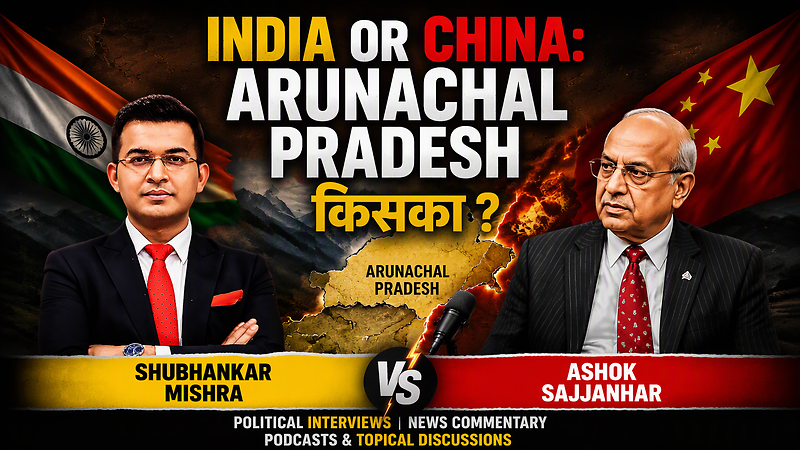
The ongoing tensions between India and China over Arunachal Pradesh have reignited discussions about the potential for renewed conflict. Shubhankar Mishra, a popular Youtuber, highlights that China continues to assert claims over Arunachal Pradesh while having occupied Aksai Chin for decades. He notes that China has renamed 27 places within Arunachal Pradesh, which raises questions about whether these issues are adequately addressed in diplomatic discussions.
In a different video, Mishra warns that China might attempt another provocation similar to the Galwan clash within the next five years, though he believes India is now better prepared for such an eventuality. He states, "China has seen that India cannot be easily subdued," pointing to improvements in India's military infrastructure since the Galwan incident.
Ajit Anjum, a political commentator, reports that recent allegations claim Chinese forces have entered up to 60 kilometres into Arunachal Pradesh, disrupting local grazing activities and halting Indian patrols. However, he cites a government minister who dismissed these claims as politically motivated and insists that the undefined nature of the border complicates the situation.
Faye D'Souza, a journalist, firmly asserts that "Arunachal Pradesh is an inalienable and integral part of India," emphasizing that nothing can alter this reality. This sentiment is echoed by Aadi from Def Talks, who critiques China's response to India's renaming of places, suggesting that China often plays the victim in these territorial disputes.
However, Aadi also points out that the Indian Army has rejected claims of Chinese incursions, labeling such reports as politically motivated. He suggests that these allegations are recurrent and often misinterpreted due to geographical misunderstandings.
Major Gaurav Arya from The Chanakya Dialogues connects these events to broader narratives, alleging that some individuals are attempting to portray regions like Kashmir and Arunachal Pradesh as outside of India, which he argues is part of a Chinese-funded narrative.
Barkha Dutt from Mojo Story discusses the ongoing face-offs in Arunachal Pradesh, referencing a statement from the ITBP chief about persistent confrontations with Chinese forces. This highlights the complexity of the situation, where military talks are ongoing even as tensions remain high.
General P.R. Shankar provides a more optimistic view, stating that while there have been face-offs along the Line of Actual Control (LAC), he does not foresee a serious escalation into conflict, especially with China's focus on internal matters.
Yogendra Yadav raises concerns over the government's silence regarding the ITBP chief's statements about Chinese military capabilities, suggesting that the public might be misled about the reality on the ground. He emphasizes that the government should be more transparent about these border issues, especially given the history of past confrontations like Galwan.
As the debate unfolds, it's clear that perspectives vary widely. Some voices like Mishra and Yadav express concern over China's aggressive posturing, while others, such as Arya and D'Souza, stress India's sovereignty and preparedness. The situation in Arunachal Pradesh remains a focal point of geopolitical tension, with implications for both national security and diplomatic relations.