Contradictions in America's Liberal Rhetoric and Its Wars
Nov 2, 2026, 22:59 IST
Summary
The debate on America's liberal rhetoric versus its wars highlights contradictions in its professed values and actions. khanversation argues that the U.S. is complicit in Israeli actions, while also noting the capacity for violence in American society that contradicts its moral claims. Both perspectives expose a dissonance between rhetoric and reality in U.S. foreign policy.
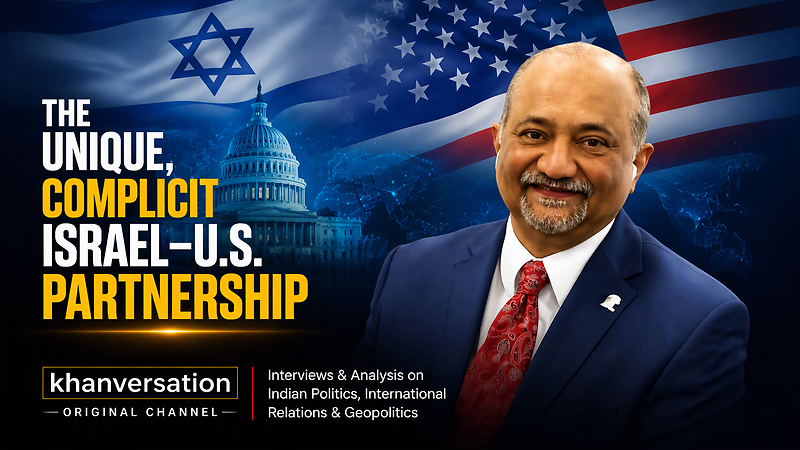
The debate surrounding America's liberal rhetoric versus its military actions reveals a stark contradiction between the nation's professed values and its real-world practices. On one side, the creator behind the channel khanversation argues that the United States is deeply complicit in Israeli actions, stating, 'There is a profound cooperation between Israel and the United States across intelligence, military, institutional, and technological spheres.' This perspective emphasizes the interconnectedness of both nations, suggesting that their partnership leads to moral complicity in various actions undertaken by Israel. The creator draws a provocative parallel, comparing Israeli advancements in technology and manufacturing to Nazi industrial practices, underscoring the ethical dilemmas inherent in such collaborations.
In contrast, another video from khanversation explores the inherent violence within American society, despite its lofty claims of morality and justice. The creator expresses astonishment at the capacity for violence prevalent in the United States, remarking, 'American foreign policy combines liberal moral rhetoric with actions approaching evil.' This perspective highlights a dissonance where the rhetoric of justice is starkly at odds with the violent realities of American military interventions.
Both perspectives from khanversation converge on a fundamental theme: the moral inconsistency between what America professes and what it practices. The first viewpoint criticizes the complicity of the U.S. in international conflicts through its support of Israel, while the second critiques the hypocrisy of American values when juxtaposed with its history of violence.
The nuanced debate raises questions about the effectiveness of liberal rhetoric in a country that engages in war and violence. While khanversation's first argument suggests a deep-seated complicity that implicates Americans in global injustices, the second argument points to a broader societal issue, indicating that the rhetoric of morality does not translate into action. This highlights a troubling disconnect that many critics point to when evaluating U.S. foreign policy.
As these discussions unfold, the tension between America's self-image as a beacon of freedom and its actions abroad continues to spark debate. The contrasting viewpoints from khanversation illustrate how the interplay of rhetoric and action creates a complex landscape that challenges both citizens and policymakers to reconcile these opposing narratives. Ultimately, the debate encapsulates a larger conversation about ethical responsibility, national identity, and the implications of American power in a global context.