Debate Over Dissent: From Urban Naxals to Dimaagi Naxals
Aug 20, 2026, 14:05 IST
Summary
The debate over the terms 'Urban Naxal' and 'Dimaagi Naxal' reveals contrasting views on dissent in India. Ajit Anjum defends activists like Yogendra Yadav, while The Sham Sharma Show criticizes leftist ideologies linked to violence. Pragya Mishra highlights the satirical Dimaagi Naxal Party, and Pooja Prasanna calls for evidence in dissent accusations, showcasing a complex dialogue on dissent and ideology.
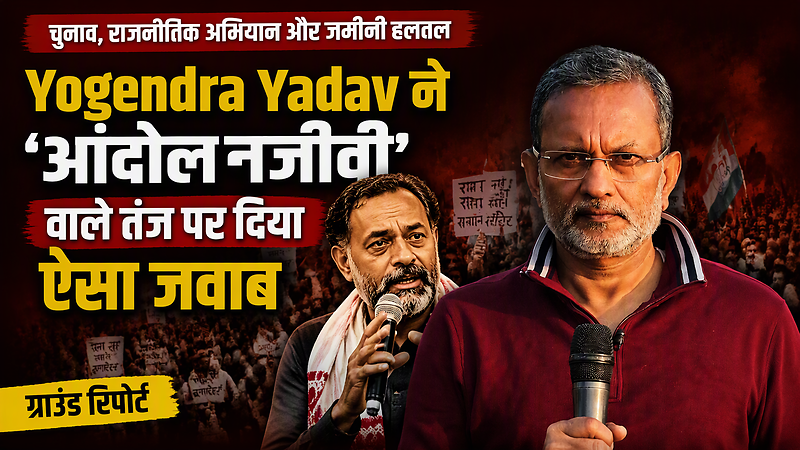
The recent emergence of the term "Dimaagi Naxal" has ignited a contentious debate about the labelling of dissent in India. This discussion has been fueled by various content creators, each offering distinct perspectives on the implications of such labels.
Ajit Anjum, a prominent commentator, argues that the term 'activist' applied to individuals like Yogendra Yadav is not inherently negative. He defends Yadav's participation in protests, stating, "Protesting against both previous and current governments is part of democracy." Anjum asserts that the farmers' movement was driven by the farmers themselves, downplaying the significance of external figures like Yadav, whose role he describes as limited. This perspective highlights the importance of grassroots activism while challenging the narrative that labels dissenters as merely opportunistic.
In stark contrast, The Sham Sharma Show presents a more critical view of leftist influences in India, particularly targeting JNU (Jawaharlal Nehru University) student groups that celebrated violent events. The creator states, "A 2010 Naxal ambush killed 75 police personnel," drawing a direct line between historical violence and current ideologies. This perspective suggests that those labelled as Dimaagi Naxals are linked to a troubling legacy of violence and ideological extremism.
Meanwhile, Ulta Chasma's Pragya Mishra discusses how Prime Minister Narendra Modi's use of the term "Dimaagi Naxal" has led to the creation of a satirical Instagram account called the Dimaagi Naxal Party, which has quickly gained 19,000 followers. Mishra explains that the account promotes the idea of critical thinking and protest, suggesting that the label has been co-opted by activists to challenge the government’s narrative. This nuance reflects a dynamic where dissenters are not merely passive victims of labels but are actively reshaping the conversation around them.
Pooja Prasanna offers yet another angle, asserting that accusations against individuals labelled as Dimaagi Naxals often lack concrete evidence of wrongdoing. She states, "Accusations of armed insurgency require evidence of actions, associations, and conduct," contrasting this with the vague nature of the Dimaagi Naxal label, which targets thoughts and beliefs rather than actions. This view critiques the political strategy of demonising dissenters without substantiating claims against them, echoing concerns raised during the arrests of activists in the Bhima Koregaon case.
As the debate unfolds, common threads emerge. Both Anjum and Prasanna defend the right to dissent, albeit from different angles—Anjum focusing on the legitimacy of protests and Prasanna on the need for evidence before labelling individuals as threats. Conversely, Sharma’s perspective challenges the morality of the ideologies behind such dissent, while Mishra illustrates how these labels can be subverted for activism.
In summary, the discourse surrounding the transition from Urban Naxal to Dimaagi Naxal highlights the complex interplay between dissent, ideology, and political narratives in contemporary India. Each voice in this debate contributes to a broader understanding of how dissent is perceived and labelled, ultimately shaping the public's engagement with these contentious terms.