Debating the Credibility of Foreign Funding Allegations Against Indian Political Parties
Nov 1, 2026, 16:50 IST
Summary
The debate over foreign funding allegations against Indian political parties reveals stark contrasts. Sandeep Deo claims that foreign funding is legalised and highlights a ₹50 crore donation linked to Covishield, while Rajdeep Sardesai challenges these allegations, demanding credible evidence. This discussion raises important questions about accountability and transparency in Indian politics.
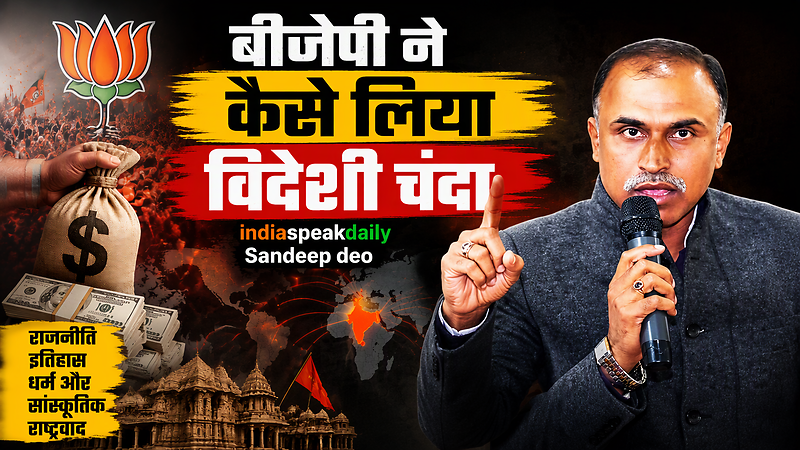
The issue of foreign funding allegations against Indian political parties has ignited a heated debate, with prominent voices presenting contrasting views on the credibility of the claims. Sandeep Deo, a popular YouTuber from India Speak Daily, argues that foreign funding has been legalised for political parties, particularly pointing out that the government banned 22,000 NGOs while allowing political parties to continue receiving foreign funds. He specifically highlights a controversial connection between the COVID-19 vaccine Covishield and foreign funding, alleging that a company linked to the vaccine donated ₹50 crore through Electoral Bonds, thereby benefiting foreign interests at the expense of public health.
In stark contrast, journalist Rajdeep Sardesai questions the basis of these allegations, particularly those made by Mohan Bhagwat, the chief of the Rashtriya Swayamsevak Sangh (RSS). Sardesai asserts that Bhagwat's claims regarding opposition parties and student protests being funded by foreign entities lack credible evidence. He challenges Bhagwat by asking, "Where's the proof?" and argues that attributing domestic protests to foreign conspiracies undermines the legitimacy of dissent in a democracy. Sardesai's position is clear: without reliable documentation, such allegations should be viewed with skepticism.
The debate illustrates a fundamental disagreement over the evidence supporting foreign funding claims. While Sandeep Deo firmly believes that the current political environment facilitates foreign influence through legal loopholes, Rajdeep Sardesai calls for accountability and transparency in such serious accusations. The contrasting narratives reflect a broader concern about the integrity of political financing in India and the implications for democratic processes.
Both creators underscore the importance of evidence in substantiating claims of foreign interference. Deo's perspective implies a systemic issue within the political framework, suggesting that foreign funding is not only prevalent but also a danger to national interests. Conversely, Sardesai's insistence on credible evidence points to a need for rigorous scrutiny of such allegations, especially when they can delegitimize legitimate political opposition.
As the debate continues, it remains crucial for both sides to engage in constructive dialogue and seek out verifiable facts to support their claims. The question of foreign funding allegations is not just about politics; it touches on the core values of accountability and transparency in governance, which are essential for a healthy democracy.