Delhi Police's New Protest SOP: Security or Suppression?
Nov 2, 2026, 23:48 IST
Summary
The debate surrounding Delhi Police's new protest SOP highlights a clash between the government’s assertion of security measures and concerns from activists about suppression of dissent. JP Nadda defends detentions as normal, while AAP's Anurag Dhanda and Rahul Gandhi argue that such actions undermine democracy. Perspectives reveal a growing tension between state authority and civil liberties.
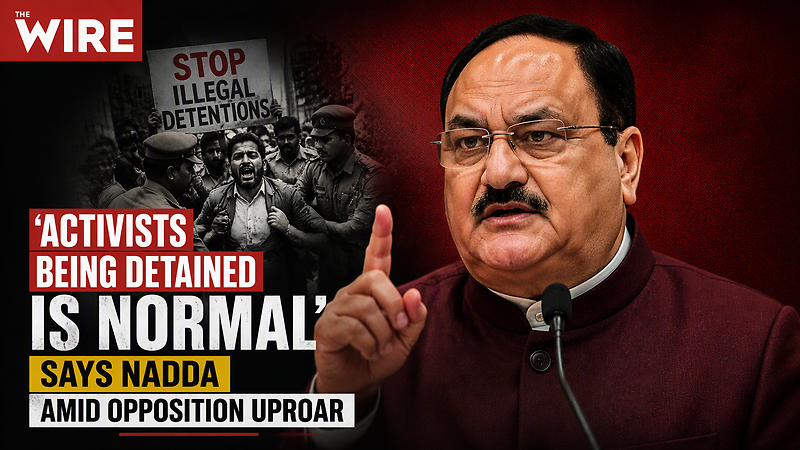
The recent implementation of new Standard Operating Procedures (SOP) by the Delhi Police has sparked intense debate over whether these measures are necessary for security or a blatant form of suppression. Activist JP Nadda, speaking on behalf of the ruling party, argues that detaining activists is a normal law-and-order procedure, stating, 'This is a very normal law-and-order situation that we need to understand.' He recalls his own experiences of being arrested during student protests, asserting that police actions are justified and necessary against active student protesters.
In stark contrast, voices from the opposition raise serious concerns about the implications of these policies for democracy. Anurag Dhanda from the Aam Aadmi Party (AAP) condemns the detentions during protests against Chief Election Commissioner Gyanesh Kumar, claiming that 'the government is fully afraid' and has transformed Delhi into a 'garrison city.' He emphasizes that the citizens have a right to peaceful protest, directly challenging the notion that these protests are a threat to security.
Rahul Gandhi further critiques the government's approach, arguing that Jantar Mantar, historically a site for democratic expression, has been effectively denotified to stifle dissent. He insists that the government cannot suppress the people's fight for their voices, highlighting a broader theme among dissenters that the current administration is undermining democratic principles.
On the other hand, some creators express skepticism about the effectiveness and necessity of protests. A perspective from NDTV presents a debate between Avishkar Singhvi and Suhel Seth, where the latter argues that while the right to protest is fundamental, it must not disrupt the lives of others. This viewpoint raises questions about balancing rights to protest with the right to peace and order.
Moreover, reports from Indian Express detail how police were instructed to prevent known activists from reaching Delhi for protests, illustrating the lengths to which authorities are willing to go to maintain control. This preemptive action is perceived by many as a direct attack on civil liberties, reinforcing the narrative that the government is increasingly authoritarian.
CJP founder Abhijeet Dipke characterizes the detentions as an 'unofficial emergency,' underscoring the extreme measures taken against individuals simply wishing to express their dissent. He notes that the actions against peaceful protesters reflect a government afraid of public outcry and dissent.
In summary, the debate around Delhi Police's new SOP is characterized by a clash of ideologies: on one side, the government framing detentions as necessary for public order, and on the other, activists and opposition leaders warning of a dangerous erosion of democratic rights. This tension illustrates the ongoing struggle between state power and individual freedoms in India today.