Democratic Erosion or Political Alarmism? The Debate on Modi's Government
Oct 31, 2026, 17:01 IST
Summary
The debate on Modi's government features contrasting views from Arfa Khanum Sherwani, who warns of state repression and potential violence, and Sandeep Deo, who accuses the government of undermining democracy to hide its failures. Both perspectives highlight the urgent need for vigilance in protecting democratic norms in India.
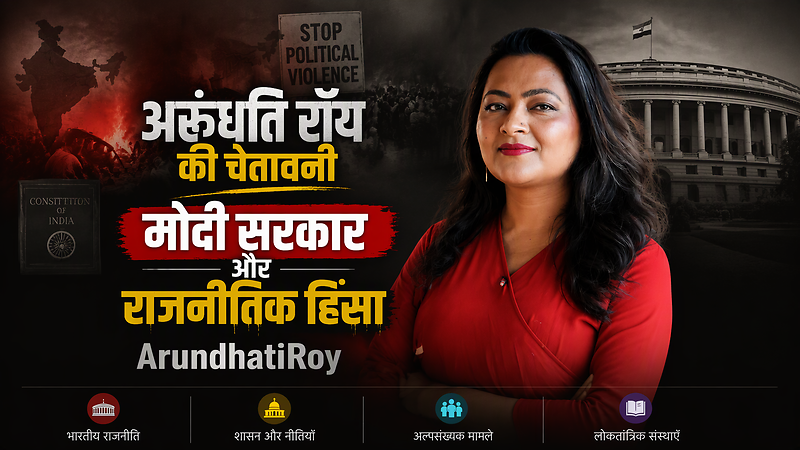
The debate surrounding the Modi government in India has intensified, with voices divided on whether the current administration represents a significant erosion of democracy or if these concerns are exaggerated political alarmism. Two prominent perspectives emerge from this discourse.
Arfa Khanum Sherwani, a political commentator, warns of severe repression from the Modi government. In her video discussing the warnings of Arundhati Roy, she argues that the government may resort to strategies such as false-flag attacks and orchestrated communal clashes to suppress dissent. She emphasizes that young people today may not fully grasp the extent of violence that has occurred in the past, referencing incidents like the Gujarat riots and the Babri Masjid demolition. Sherwani stresses, "We have to be very careful because a lot of repression is going to come."
On the other hand, Sandeep Deo, a commentator from India Speak Daily, accuses the Modi government of attempting to cover up its alleged wrongdoings by undermining democratic principles. He asserts that the government's actions, particularly around the inauguration of the new Parliament building, signal a drift towards dictatorship. Deo claims, "The government has committed acts against India and is moving toward dictatorship." He argues that the lack of transparency and accountability reflects a deeper malaise within the government.
While both Sherwani and Deo share a concern about the state of democracy under Modi, they approach the issue from different angles. Sherwani focuses on the potential for state-sponsored violence to quell dissent, while Deo emphasizes the government's attempts to conceal its failures through undemocratic practices. This divergence illustrates a broader tension in the discourse around Modi's rule, where the fear of violence is juxtaposed with concerns about authoritarian governance.
Despite their differing emphases, both voices underscore the urgent need for vigilance in protecting democratic norms. Sherwani's emphasis on historical violence serves as a cautionary tale, reminding audiences of the potential for history to repeat itself. Meanwhile, Deo's focus on the erosion of democratic institutions calls for accountability and reform.
As the debate unfolds, it is clear that the implications of Modi's governance extend beyond immediate political concerns. The intersection of potential violence and the undermining of democratic institutions raises critical questions about the future of democracy in India. With both perspectives highlighting the need for awareness and action, the discourse remains a vital part of the ongoing conversation about the health of India's democracy under Modi's leadership.