'Dimaagi Naxal': A Label for Critics or a Call to Action?
Nov 4, 2026, 17:01 IST
Summary
The debate on Prime Minister Modi's term "dimaagi naxal" reveals stark divisions. Critics, including The Wire and India Today, argue it serves as a tool for silencing dissent, while supporters like Kiren Rijiju claim it targets anti-national ideologies. This tension highlights the broader struggle over free speech and the boundaries of acceptable criticism in India today.
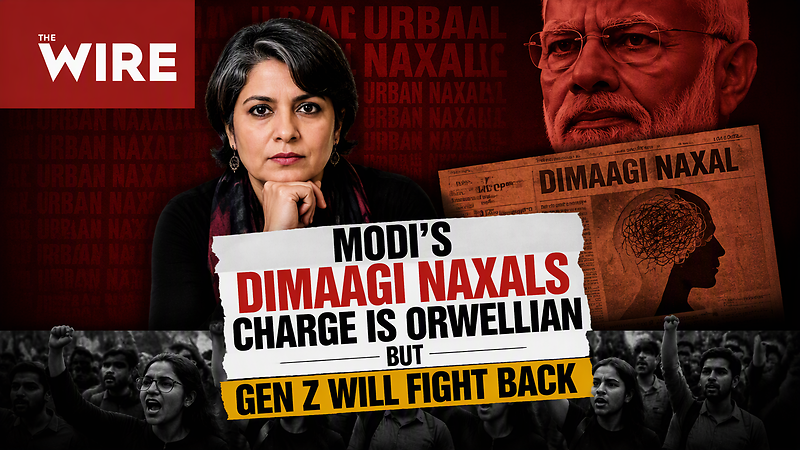
The debate surrounding Prime Minister Narendra Modi's use of the term "dimaagi naxal" has ignited fierce discussions among commentators and content creators. Some view it as a chilling tactic to silence dissent, while others argue it targets radical ideologies undermining India's constitutional values.
In a video by The Wire, the creators assert that Modi's rhetoric poses a grave threat to democracy. They argue that his campaign against "urban Maoists" resembles an Orwellian approach to political opposition. They warn that Modi's attempts to isolate dissenters could lead to a significant erosion of constitutional values in India, claiming, "Narendra Modi’s campaign against ‘urban Maoists’ threatens India’s democracy and constitutional values." They also highlight a poignant anecdote about a slain activist’s son who rejected compensation in favor of a school memorial, emphasizing the resilience of civil society against oppressive narratives.
Similarly, another perspective from The Wire suggests that Modi's statements imply a dangerous agenda. They contend that by labeling dissenters as "dimaagi naxals," Modi is not just identifying opposition but potentially advocating for their elimination. This viewpoint underscores the risks of equating critical thought with extremism, warning that it evokes historical precedents of McCarthyism.
The Wire also highlights the broader implications of this labeling, noting that esteemed historians like Irfan Habib and Romila Thapar, who have long critiqued government policies, are now being branded as Maoists. They argue, "This is not just arrogance; it resembles the McCarthyism we witnessed in America during the 1950s."
Conversely, in a video by India Today, Brinda Karat argues that the term "dimaagi naxal" is a form of thought policing reminiscent of totalitarian regimes. She posits that Modi's government seeks to suppress independent thought, stating, "If anyone opposes Modi, they are labeled 'dimaagi naxals'." This sentiment resonates with The Quint's assertion that the government is redirecting public anger towards imagined enemies, effectively criminalizing democratic questioning.
On the other side, Kiren Rijiju, speaking to NDTV, defends the term, claiming that true "dimaagi naxals" reject India's Constitution and seek to disrupt national growth. He argues that these individuals promote separatist ideologies that threaten India's unity. His perspective contrasts sharply with the criticisms from The Wire and India Today, highlighting a divide in how the term is perceived.
Anurag Thakur from India Today echoed Rijiju's sentiments, emphasizing that Modi's administration has effectively dismantled Naxalism in over 110 districts, framing critics as perpetuators of dissent rather than legitimate voices of opposition. He states, "The Modi government has eliminated Naxalism across more than 110 districts by March 2026."
As the debate unfolds, it becomes evident that Modi's characterization of dissent as "dimaagi naxalism" has sparked a complex dialogue about the nature of opposition in contemporary India. While some see it as a necessary measure against radical ideologies, others view it as an alarming trend towards authoritarianism, underscoring the fragility of democratic discourse in the country.