Discrimination Against Muslims: A Growing Concern?
Nov 4, 2026, 19:00 IST
Summary
The debate on discrimination against Muslims in India intensifies with varied perspectives. Sanjay Dixit highlights individual rights in halal arrests, while Arfa Khanum Sherwani links systemic discrimination to political motives, emphasizing the targeting of Muslims. Dr. Qamar Cheema raises concerns about sidelined Muslim officers, and Shubhankar Mishra critiques identity politics. The discussion underscores a troubling trend of routine discrimination.
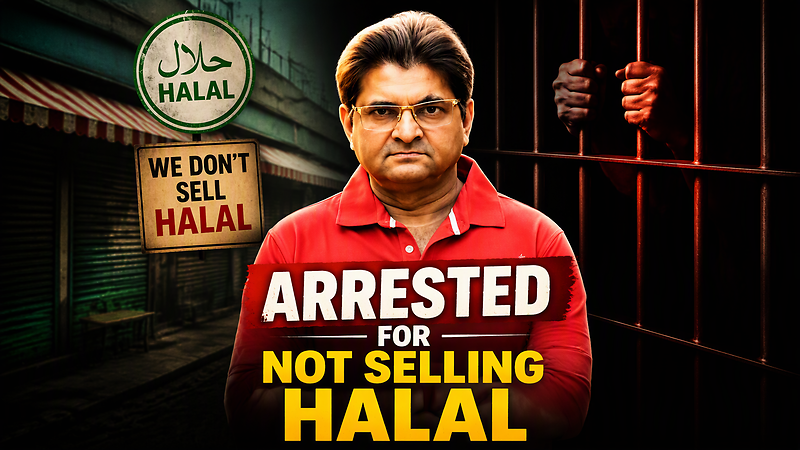
The debate surrounding discrimination against Muslims in India has intensified, with various content creators voicing their concerns over recent incidents involving namaz FIRs, halal arrests, and the sidelining of Muslim officers. Sanjay Dixit from The Jaipur Dialogues highlights the case of an English shopkeeper who was arrested for refusing to sell halal products, arguing that the police's intervention reflects a troubling trend. He asserts, 'The shopkeeper has the right to choose what products to sell.' This perspective underscores a perceived encroachment on individual rights, which some see as part of a broader narrative of discrimination.
In contrast, Arfa Khanum Sherwani presents a more systemic view of discrimination, linking it to the political landscape in Uttar Pradesh. In her video discussing FIRs filed against a mosque and a political leader for offering prayers, she claims, 'These incidents are happening because the elections are approaching.' Her argument suggests that the targeting of Muslims is not just isolated incidents but part of a larger strategy to marginalize the community during politically charged times.
Sherwani further deepens the conversation by questioning the constitutional validity of such actions. She argues, 'You cannot target a community based on religion,' emphasizing that Muslims are being treated as second-class citizens. This sentiment resonates with her earlier video, where she poses the question, 'Why have Muslims been made second-class citizens?' This perspective highlights a sense of injustice felt within the community, which she believes undermines the unity that helped India gain independence.
Adding to the narrative, Sherwani also discusses the troubling case of Junaid, a Muslim who was allegedly abducted by masked men claiming to be police officers. She recounts, 'They covered Junaid’s face and kept him blindfolded overnight,' illustrating the fear and violence faced by Muslims. Her detailed account raises concerns about the safety of Muslims in India, suggesting a pattern of targeted violence.
On the administrative side, Dr. Qamar Cheema points to the sidelining of Muslim officers during a visit by Amit Shah, alleging that three Muslim police officers were told to go home because 'we need Hindus here.' He cites an 11-page letter from Mahua Moitra to a human rights commission, raising alarms about systemic discrimination within law enforcement. Cheema's insights add another layer to the discussion, indicating that discrimination is not just societal but also institutional.
In a related vein, Shubhankar Mishra critiques the public perception of figures like Hamid Ansari, arguing that identity politics has overshadowed competence. He notes, 'Public perceptions of Hamid Ansari were shaped around his religious identity,' suggesting that biases influence how individuals are viewed in positions of power.
While Dixit emphasizes individual rights in the context of personal choice, Sherwani and Cheema focus on the systemic nature of discrimination against Muslims, highlighting both societal and institutional dimensions. The perspectives converge on the notion that discrimination against Muslims is becoming routine, manifesting in various forms, from arrests to political sidelining. This multifaceted debate reflects a deepening concern over the treatment of Muslims in contemporary India, raising questions about the future of communal harmony and justice.