Does Modi Exploit Pakistan Tensions for Electoral Gain?
Nov 24, 2026, 19:00 IST
Summary
The debate over whether Narendra Modi exploits tensions with Pakistan for electoral gain reveals contrasting views. Dr. Muqtedar Khan argues that Modi used the 2019 Balakot strike to deflect criticism towards Pakistan, while Dr. Qamar Cheema emphasizes the radicalized Indian public's response to anti-Pakistan rhetoric, suggesting it could shape Modi's succession plans. Both perspectives highlight the complex interplay between military action and electoral politics.
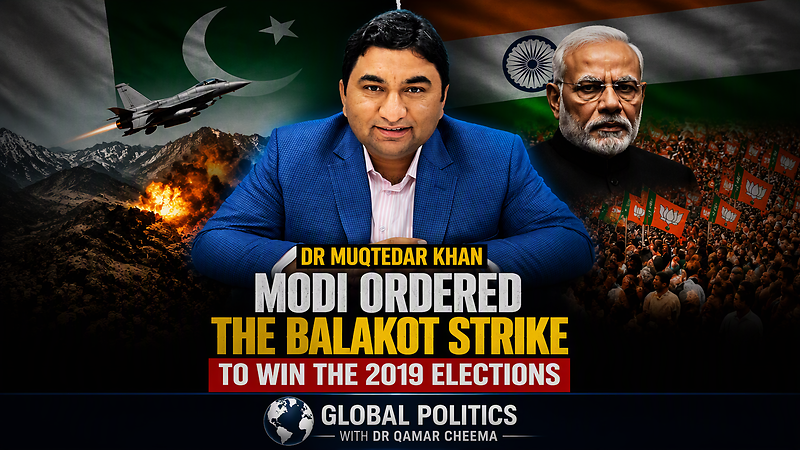
The ongoing debate about whether Indian Prime Minister Narendra Modi leverages tensions with Pakistan to secure electoral victories has sparked contrasting opinions among various content creators.
Dr. Muqtedar Khan, featured in a video by global politics with Dr. Qamar Cheema, asserts that Modi ordered the Balakot strike in 2019 specifically to bolster his chances in that election. He argues, 'Modi and his government cannot directly attack Indian Muslims, so they deflect their criticism towards Pakistan.' This tactic, he claims, has embedded the perception of Pakistan as synonymous with terrorism within Indian public consciousness. He adds that while Hafiz Saeed, a prominent figure in Pakistan, is currently serving a court-imposed sentence, the Indian narrative continues to associate Pakistan with terrorism, a perception that Modi's government capitalizes on during elections.
On the other hand, the same creator, Dr. Qamar Cheema, presents a broader view on the implications of anti-Pakistan rhetoric in Indian elections. He emphasizes the significance of the upcoming Uttar Pradesh elections, suggesting they could significantly shape Modi's succession plans for 2029. Cheema argues that a potential victory for Yogi Adityanath would position him as a strong successor to Modi, creating internal political tensions within the BJP. He states, 'If it means waging war against Pakistan to win elections, that’s a line many believe Modi is willing to cross.' Cheema notes that the Indian public has become increasingly radicalized against Pakistan, suggesting that any anti-Pakistan statement could translate into electoral popularity for Modi or his successors.
While both creators agree that Modi's government utilizes Pakistan's image for political gain, they diverge on the specifics of how this plays out. Dr. Khan focuses on the direct implications of specific military actions, such as the Balakot strike, while Cheema underscores the broader societal and political dynamics at play in the Indian electorate's response to Pakistan.
The discussion reveals a complex interplay of military strategy and electoral politics, suggesting that Modi’s relationship with Pakistan is not just about national security but also about manipulating public sentiment to secure political power. This nuanced understanding highlights the multifaceted nature of Modi's electoral strategies, raising questions about the ethical implications of such tactics in a democracy.