Election Commission Under Fire: Dissenting Voices or Institutional Crisis?
Oct 30, 2026, 18:00 IST
Summary
The debate around the Election Commission of India highlights dissenting voices among commissioners, primarily Vivek Joshi and Sukhbir Singh Sandhu, who raise concerns about transparency and decision-making. Critics like Yogendra Yadav question their past silence, while others, including Faye D'Souza and Udit Raj, argue for accountability and transparency amid allegations of bias. The situation raises critical questions about the integrity of India's electoral processes.
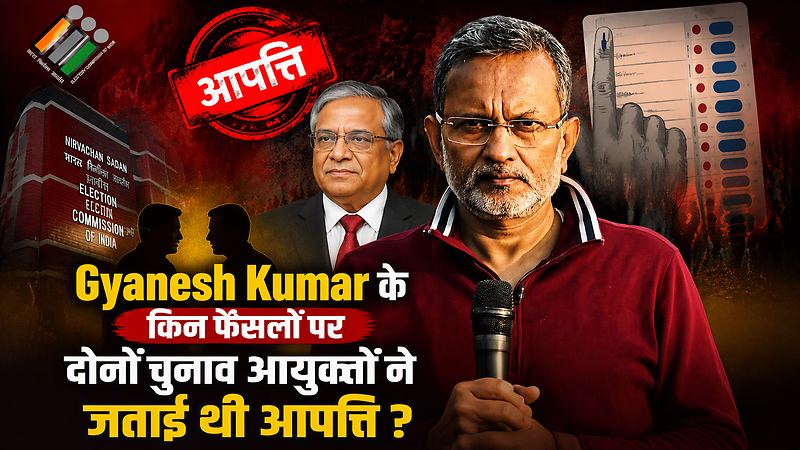
The recent turmoil within the Election Commission of India has sparked a heated debate on whether dissenting voices among commissioners represent a necessary check on authority or indicate a deeper institutional crisis. Various content creators have weighed in, highlighting significant concerns about the commission's functioning and the implications for democracy.
Ajit Anjum, a popular journalist, emphasizes the objections raised by Election Commissioners Vivek Joshi and Sukhbir Singh Sandhu against communications issued without the Election Commission's approval. He points out that Joshi has repeatedly criticized the lack of timely agendas for meetings, stating, "Agendas arrived minutes before meetings for over a year." This, according to Anjum, raises serious questions about the transparency and decision-making processes within the commission.
Yogendra Yadav, a prominent political analyst, adds another layer to the conversation by questioning the actions of the dissenting commissioners themselves. He argues that if they believed Gyanesh Kumar's decisions were illegal, they should have taken stronger action at the time rather than remaining silent during critical meetings. Yadav states, "If they knew it was illegal, why didn't they call a meeting?" This critique suggests that the dissent may be too little, too late, undermining their credibility.
Sakshi Joshi, another journalist, echoes Anjum's findings, revealing that the dissenting commissioners filed 14 objections over ten months regarding issues such as voter registration and deletions. She highlights that the Special Intensive Revision (SIR) process has led to over 13 crore names being excluded from draft rolls across 30 states, raising alarm over the potential disenfranchisement of voters.
Faye D'Souza, a well-known commentator, reflects on the broader implications of these internal disputes. She stresses the importance of democratic integrity, asserting that the Election Commission's actions must align with constitutional values. D'Souza argues, "Political parties should collectively discuss actions allegedly undermining constitutional democracy," urging for a united front against perceived violations.
Udit Raj, a Congress leader, adds a critical perspective by accusing Gyanesh Kumar of acting under government pressure, stating, "Kumar is no longer independent; he has become part of the government." He claims that the SIR process disproportionately affects non-BJP voters, suggesting a systematic bias in the voter-list management.
Conversely, Harsh Vardhan Tripathi calls for transparency from the Election Commission, insisting that Gyanesh Kumar should publicly address the reported disagreements among commissioners. He notes, "Gyanesh Kumar should explain the discrepancies to restore public confidence in the commission."
In a striking turn, a recent joint press release from the Election Commission acknowledges some of the concerns raised, admitting to potential wrongdoing in the software-based voter deletions. Yadav interprets this as an admission of guilt, arguing that all three commissioners should be held accountable for the mishandling of the voter registration process.
As the debate unfolds, it is clear that the Election Commission is facing significant scrutiny from various fronts. With elections approaching in multiple states, the implications of this internal strife could have far-reaching consequences for Indian democracy. The question remains: are these dissenting voices a healthy check on power, or does this signal an institution in crisis?