Escalating Defence Spending: India, Pakistan, and the Role of China
Nov 19, 2026, 10:00 IST
Summary
In the wake of the 2025 war, defence spending has escalated in India and Pakistan, with China's backing for Pakistan adding complexity. Qamar Cheema highlights India's increased budget for military modernization and its implications for regional security. He also discusses the controversial US-Pakistan drone deal and India's rejection of the F-35, emphasizing the urgent need for strategic preparedness.
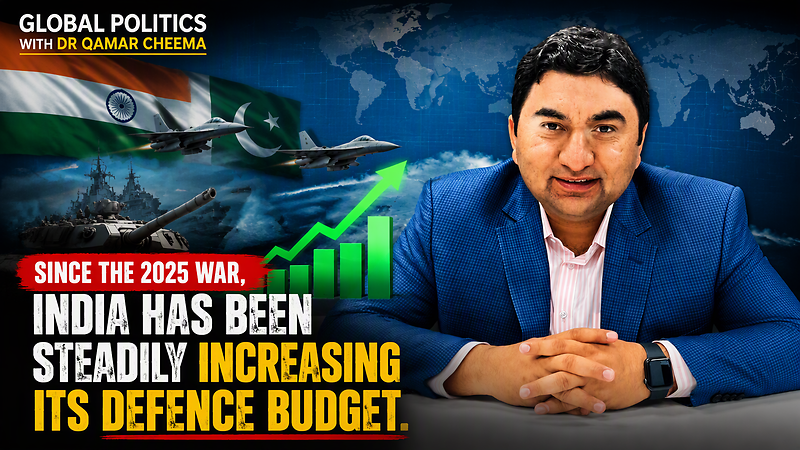
The aftermath of the 2025 war has ignited a fierce debate over defence spending in India and Pakistan, especially in light of China's backing for Pakistan. Popular YouTuber Qamar Cheema emphasizes that India has been steadily increasing its defence budget, which he argues is essential for preparing for a potential two-front war. He points out that while Pakistan's total defence budget is being matched by India's new acquisitions, the reality is stark: 'Pakistan's defence budget cannot match India's spending because resources are limited.' Cheema also references a US Congressional report that described Pakistan's clear military victory over India, highlighting the complexities of the regional military landscape.
In a separate discussion, Cheema addresses a recent drone deal between a US firm, Powerus, and Pakistan, which has stirred controversy in India. He notes, 'Donald Trump's son is linked to Powerus's drone business,' suggesting that this connection complicates the geopolitical dynamics further. He mentions that this deal has sparked Indian criticism over Pakistan's access to advanced military technology, raising concerns about an arms race in the region.
Cheema continues by outlining India's military modernization efforts, stating, 'India will receive 156 helicopters by 2032,' with an emphasis on expanding its air force capabilities. He argues that Pakistan has targeted India's Rafale aircraft and S-400 systems during past conflicts, underscoring the strategic challenges India faces. This is echoed in his analysis of India’s 2026 defence budget, which he claims reached a record $85.6 billion after a 15% increase. He argues that this budget aims to boost domestic production and technology transfer, indicating India's push for self-reliance in defence.
Cheema also touches upon India's rejection of Trump's F-35 offer, stating, 'India rejected the F-35 offer, considering the aircraft too expensive,' and raises concerns that American conditions could restrict its use against Pakistan. He highlights the need for India to acquire 40 to 50 new fighter jets annually but notes the budget constraints that make this challenging.
Moreover, he discusses India's acquisition of advanced drones, including 450 Nagastra-I loitering munitions and 225 high-altitude drones, emphasizing that these are specifically intended for operations against Pakistan. He notes that 'India reported 863 Pakistani-origin drone intrusions along the western front in 2025,' illustrating the heightened tensions in the region.
Lastly, Cheema warns that while Pakistan is preoccupied with Middle Eastern affairs, India is focused on military modernization. He states, 'India is rapidly expanding domestic defence production under the Atmanirbhar Bharat initiative,' indicating a strategic pivot towards self-sufficiency in defence technology. He concludes with a call for vigilance, asserting that Pakistan must remain aware of India's military advancements and be prepared for the implications of an evolving security landscape.