Feeding the Fight: How Swiggy and Zomato Fuel Solidarity at Protests
Jul 22, 2026, 18:00 IST
Summary
The debate surrounding food deliveries at Jantar Mantar highlights various perspectives on solidarity. Ajit Anjum notes the logistical support from Swiggy and Zomato, while Barkha Dutt showcases the variety of food available. Faye D'Souza emphasizes individual contributions, and Saurabh Shukla and Shyam Meera Singh highlight grassroots efforts. Together, they illustrate a complex web of support for protesters.
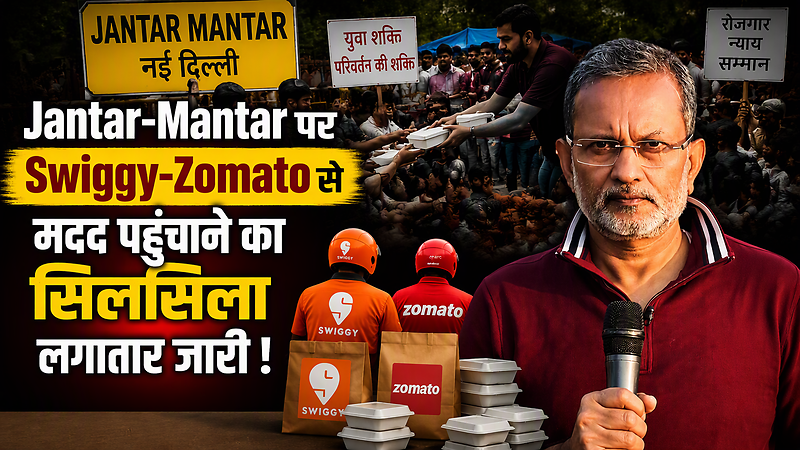
As protests unfold at Jantar Mantar, the role of food delivery services like Swiggy and Zomato has sparked a lively debate about the economics of solidarity. Ajit Anjum, a journalist, reports that individuals across India are using these platforms to send meals to protesters, stating, "People across India are ordering food through Swiggy and Zomato for Jantar Mantar protesters." He highlights the significant presence of delivery motorcycles—"around 25 to 40 delivery motorcycles are bringing orders to the protest site"—indicating a robust logistical effort to support those demonstrating.
Barkha Dutt, a prominent journalist, adds to this narrative, showcasing the variety of food available at the protest. In her coverage, she notes, "People at Jantar Mantar are receiving chicken biryani and other food deliveries," emphasizing that both Swiggy orders and homemade meals are contributing to the sustenance of protesters. This reflects a communal effort, with various individuals stepping in to provide nourishment.
Faye D'Souza echoes this sentiment, reporting on a specific case where a resident of Mumbai, Anuj Rawat, has paid online for food to be delivered to hungry protesters. She shares, "Hungry people at Jantar Mantar can eat Anuj Rawat's online-ordered food," illustrating how individual contributions are pivotal in sustaining the protest effort.
However, the conversation shifts when Saurabh Shukla, another journalist, highlights the communal aspect of the food distribution. He observes that volunteers are not only relying on delivery apps but also bringing food from local establishments like McDonald's and Chaayos, stating, "People are donating money, food, and labour after yesterday’s lathi charge." This perspective underscores a grassroots movement where individuals are actively participating in feeding the protesters.
Shyam Meera Singh brings a more personal touch to the narrative by showcasing the spontaneity of support from citizens. He describes how individuals are ordering food for protesters in significant quantities, with one person mentioning, "Some food deliveries contained seven, ten, or twenty burgers for protesters." His report conveys a sense of camaraderie among citizens who refuse to let external pressures, like internet shutdowns or police violence, deter their solidarity. He insists, "Internet shutdowns, tear gas, and baton charges will not stop protesting students."
In contrast, while all creators recognize the essential role of food deliveries, there is a notable emphasis on different facets of this support. Anjum and Dutt focus on the logistical and communal aspects, while Shukla and Singh highlight the active participation and personal contributions of individuals. Together, these perspectives paint a comprehensive picture of how Swiggy and Zomato have become symbols of solidarity amid protests, illustrating a dynamic interplay between technology, community, and activism.