France's Unrest: Temporary Violence or a Crisis of Authority?
Oct 24, 2026, 08:05 IST
Summary
The debate surrounding France's recent unrest pits Faye D'Souza's condemnation of violence against Khanversation's assertion of a failed state. D'Souza emphasizes the need for government support for affected communities, while Khanversation questions the state's authority amid ongoing chaos. The discourse highlights contrasting views on the implications of the protests for France's governance.
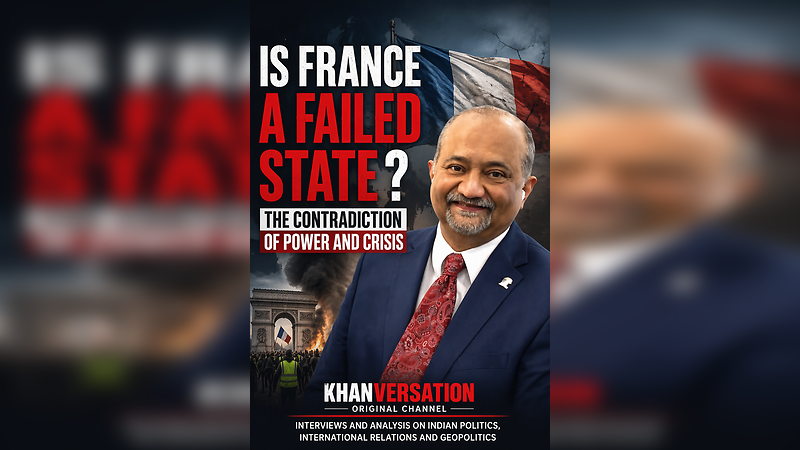
The recent unrest in France has sparked a heated debate about whether the violence seen in protests is merely a temporary outburst or indicative of a deeper crisis in state authority. Popular YouTuber Faye D'Souza argues vehemently against the violence, citing the chaos that erupted on October 17, where 'des commerces ont été pillés' (shops were looted) and public buildings were attacked. She expresses her outrage over the destruction of municipal buildings and the injuries sustained by hundreds of police officers during these protests. D'Souza emphasizes that 'nothing justifies, nothing explains, nothing excuses' such actions, urging for government accountability and support for affected businesses and law enforcement.
In stark contrast, Khanversation, a content creator known for discussing geopolitical issues, presents a more critical view of France's state authority. He asserts that the ongoing riots and looting signal a loss of control by the French government, declaring that 'France has become a failed state.' While he acknowledges France's economic strength—pointing out its impressive per-capita income of approximately $49,000—he questions how such a prosperous nation can face such unrest. Khanversation's perspective raises the question of whether the government's response to these protests reflects a broader failure in governance.
Both creators agree that the violence is unprecedented, but they diverge sharply on its implications. D'Souza focuses on the need for immediate support and order restoration, while Khanversation sees this as a symptom of systemic failure. He provocatively asks, 'Is France a failed state?' suggesting that the current crisis is rooted in deeper issues of governance rather than isolated incidents of violence.
This debate reveals a significant divide in interpreting the events unfolding in France. D'Souza's call for unity and support contrasts with Khanversation's alarmist tone regarding state authority. As protests continue, the question remains: is this unrest a fleeting moment of chaos, or does it point to a more profound challenge to the stability of the French state? Both perspectives highlight the urgency for the French government to address the underlying causes of discontent while managing the immediate fallout of the violence. The discussions continue to evolve, reflecting the complex nature of state authority in times of crisis.