Godi Media: Heatwave Theories, Trump Claims, and the Hired Crowd Controversy
Nov 2, 2026, 14:38 IST
Summary
The debate on 'Godi Media' encompasses critiques of UPI charges by Ashneer Grover, media manipulation regarding political events highlighted by Meghnad, and Sanjay Rajoura's assertions about historical media roles. Yogendra Yadav questions survey methodologies, while Dr. Qamar Cheema addresses false narratives against Pakistan, showcasing a complex discourse on media accountability and public perception.
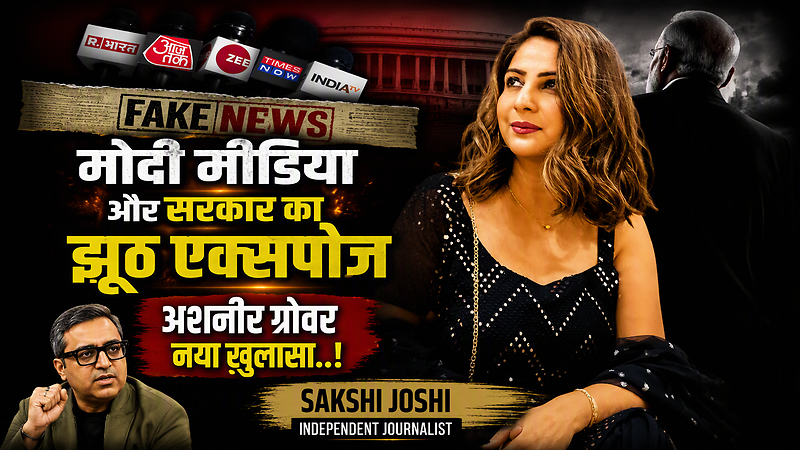
The debate surrounding 'Godi Media' has taken center stage, particularly regarding its handling of narratives around recent heatwaves, Donald Trump's interactions with Indian Prime Minister Narendra Modi, and the alleged orchestration of crowds at political events. Each perspective adds layers to this complex discourse.
Youtuber Sakshi Joshi brings forth the claims of Ashneer Grover, former MD of Bharat Pay, who critiques the government and media's stance on UPI merchant discount rates (MDR). He argues that any additional costs imposed on merchants will ultimately be passed down to consumers, questioning the government's assertion that these charges are not a tax. Grover suggests that if UPI is indeed saving the banking system substantial costs, then the need for an MDR is unfounded. He warns that implementing such charges could undermine the very benefits of a frictionless payment system that UPI offers.
In contrast, Youtuber Meghnad, in a humorous take, critiques how Aaj Tak and other media outlets are framing narratives, particularly regarding a recent paper leak in Punjab. He highlights how Ramveer Chandel was introduced as a spokesperson for the CJP, despite his minimal social media presence, implying a deliberate attempt by the media to mislead the public about who is representing student interests. This reflects a broader concern about media manipulation and the creation of narratives that serve specific agendas.
Adding to the discourse, Sanjay Rajoura, another Youtuber, posits that the current media landscape is reminiscent of colonial times, suggesting that if the media had existed during the British rule, it would have worked to suppress the independence movement. He criticizes the media's role in shaping public perception, implying that contemporary figures like Navika Kumar would have downplayed the significance of historical protests, thus contributing to a culture of victim-blaming.
On the topic of Trump, Rajoura also suggests that Indian media portrays a narrative of Trump being intimidated by Modi, which he argues is a gross misrepresentation. He asserts that Modi displays a different demeanor abroad compared to his interactions within India, questioning the authenticity of the media’s portrayal of international relations.
Meanwhile, Yogendra Yadav critiques the methodology of India Today’s latest survey, which claims an increase in BJP's popularity. He points out that the survey combines recent interviews with older data, potentially skewing the results and misleading the public about the current political mood in India. Yadav emphasizes that while the survey suggests BJP gains, public sentiment regarding government handling of issues remains critical.
Global Politics with Dr. Qamar Cheema shifts the focus to the international narrative, questioning why India continues to propagate false propaganda against Pakistan. He cites a recent incident involving a Pakistani soldier, arguing that the Indian media misrepresented the situation to further its own narrative against Pakistan.
Through these varying perspectives, a clear picture emerges: the debate on 'Godi Media' is not merely about the dissemination of news but is deeply entwined with issues of accountability, representation, and the power of narrative. Each voice contributes to a growing skepticism towards media practices and the implications these have on public perception and democracy.