Hindu-Muslim Polarisation: Voices from the Frontlines of Cultural Assertion and Communal Division
Nov 2, 2026, 11:10 IST
Summary
The debate on Hindu-Muslim relations in India features diverse perspectives, from Shubhankar Mishra's historical insights on communal divisions to Sanjay Dixit's critiques of political figures. Voices like Khan Saab and Baba Ramdev advocate for unity, while Hafiz Ghulam Sarwar questions political engagement with parties like the BJP. The discussion highlights ongoing insecurities and the need for accountability within political leadership.
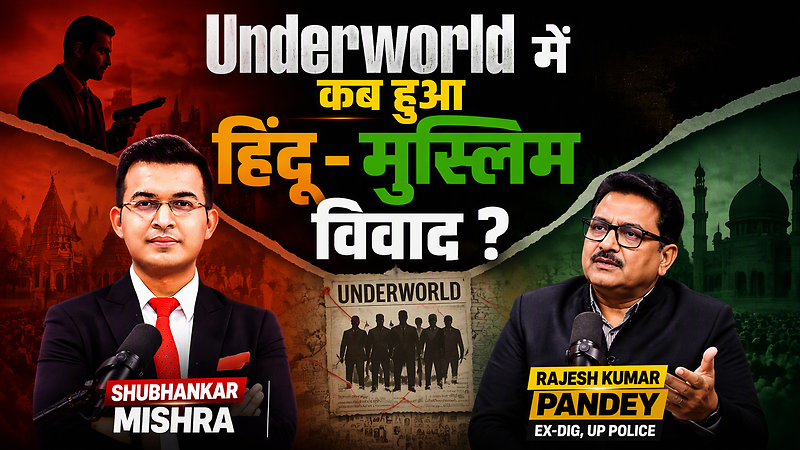
In the ongoing debate about Hindu-Muslim relations in India, various content creators present starkly contrasting views on the nature of communal division and cultural assertion. Shubhankar Mishra, a popular YouTuber, highlights the historical roots of the Hindu-Muslim divide, claiming that the Bombay blasts served as a pivotal moment that exacerbated tensions within Mumbai's underworld. He suggests that figures like Dawood Ibrahim and Chhota Rajan were directly influenced by these divisions, stating, "The Bombay blasts created a Hindu-Muslim divide within Mumbai’s underworld."
Conversely, Sanjay Dixit from The Jaipur Dialogues critiques political figures like Chirag Paswan for celebrating figures like Mother Teresa, whom he argues has a controversial legacy involving conversion and foreign funding. He asserts that Hindu nationalists should scrutinize the histories of those they present as ideals, highlighting a broader concern over how cultural figures are appropriated in political narratives.
Dixit further elaborates on the perceived threats to Hindu culture, suggesting that minority groups, including Muslims, have created a media ecosystem that distorts narratives about their persecution. He states, "Indian American Muslim Council offers dollar grants and awards to Indian journalists" to report on minority issues, raising questions about the integrity of such funding under Indian laws.
In contrast, voices like Khan Saab emphasize unity across religions. He argues for a harmonious existence, stating, "I use music to unite Hindus, Muslims, Sikhs, and Christians." This sentiment of unity is echoed by Baba Ramdev, who encourages Muslims to reconnect with their Hindu ancestry, positing that such connections can empower both communities.
Mishra's various videos reflect a deep concern for the safety and representation of Muslims in India. He discusses the ongoing feelings of insecurity among Muslims, as articulated by former Vice President Mohd Hamid Ansari, who noted that "Indian Muslims continue feeling insecure because of their religious identity." This sentiment resonates with Ansari's broader reflections on the need for political representation that transcends sectarian divides.
On the other hand, Hafiz Ghulam Sarwar raises critical questions about Muslim political engagement, suggesting that Muslims should not automatically reject parties like the BJP, stating, "Political parties, whom you prefer, should be the focus, not the religious affiliations." He argues for a more pragmatic approach to voting, emphasizing that voters should support candidates based on merit rather than sectarian biases.
However, the debate often devolves into accusations of hypocrisy and opportunism, as seen in Mishra's critiques of politicians who fail to represent their constituents' interests effectively. He claims, "No Muslim Congress leader resigned over the Babri Masjid demolition," highlighting a perceived lack of accountability among Muslim political leaders.
The polarisation within the discourse is stark, with some creators, like Major Gaurav Arya from The Chanakya Dialogues, arguing that internal threats from sympathizers of radical ideologies pose a greater danger than external enemies like Pakistan. He asserts, "Internal adversaries are harder to identify than Pakistan’s clearly defined enemy."
This multifaceted debate reflects a broader struggle within Indian society, where cultural assertion often clashes with communal division. As voices from various backgrounds continue to shape the narrative, the question remains: can India find a way to bridge these divides and foster a sense of unity among its diverse populations?