India and Pakistan: Diverging Narratives on Terrorism Concerns
Nov 1, 2026, 18:00 IST
Summary
The debate over terrorism concerns reveals stark contrasts between India and Pakistan. Qamar Cheema argues that India focuses on Pakistan's alleged terrorism while ignoring the Taliban's ties to extremist groups. He critiques Pakistan's lack of assertiveness in addressing its own terrorism issues internationally, suggesting that both nations must navigate complex geopolitical narratives more effectively.
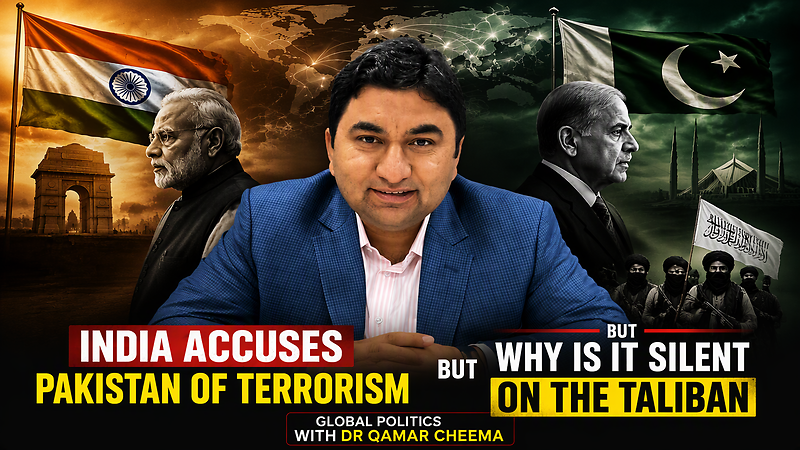
The international discourse surrounding terrorism often sees stark contrasts between India and Pakistan, particularly in how each country raises concerns on the global stage. Popular YouTuber Qamar Cheema, in his video 'India accuses Pakistan of terrorism, but why is it silent on the Taliban?', highlights that India tends to focus on Pakistan's alleged terrorism while neglecting the Taliban's connections to groups like the Tehrik-i-Taliban Pakistan (TTP) and Al-Qaeda. Cheema argues that India’s selective emphasis on Pakistan serves to deflect attention from its own issues with the Taliban, suggesting that 'India should have stated that there are thousands of terrorists present in Afghanistan' instead of solely targeting Pakistan.
In a related video titled 'Why doesn't it raise the issue of terrorism against Pakistan at international forums?', Cheema further critiques India’s approach, noting that the country uses the Financial Action Task Force (FATF) as a platform to exert pressure on Pakistan regarding counter-terror financing. He states, 'India wants to dictate Americans that their South Asia policy should align with what India tells them.' This assertion underscores his view that India is strategically leveraging international forums to shape narratives that paint Pakistan in a negative light while advancing its own geopolitical interests.
Contrastingly, Cheema expresses concern over Pakistan’s lack of assertiveness in addressing its own struggles with terrorism on international platforms. He notes that while Pakistan is significantly affected by terrorism, it fails to articulate its position forcefully enough in global discussions, stating, 'Pakistan does not speak forcefully enough internationally about its terrorism burden.' He believes this weakens Pakistan's ability to counter India's narrative effectively.
Both perspectives from Cheema reveal a complex interplay of geopolitics where India’s focus on Pakistan's alleged terrorism is juxtaposed with Pakistan’s perceived failure to robustly address its own issues. The debate highlights a fundamental disagreement over the narratives each country promotes on the international stage. Cheema’s arguments suggest that while India is adept at using international platforms to its advantage, Pakistan must adopt a more aggressive stance to ensure its voice is heard amid the ongoing discourse on terrorism. This ongoing dialogue illustrates the broader implications of regional politics and the significance of narrative control in international relations.