India-Israel Relations: Strategic Partnership or Ethical Dilemma?
Oct 21, 2026, 10:30 IST
Summary
The debate on India-Israel relations features diverse perspectives. Major Gaurav Arya argues for the strategic benefits of the partnership, while Dr. Qamar Cheema warns of potential reputational damage due to India's involvement in Gaza. Cultural ties are emphasized by the Israeli ambassador, whereas critiques focus on India's arms trade and dependence on Israeli technology, raising ethical questions.
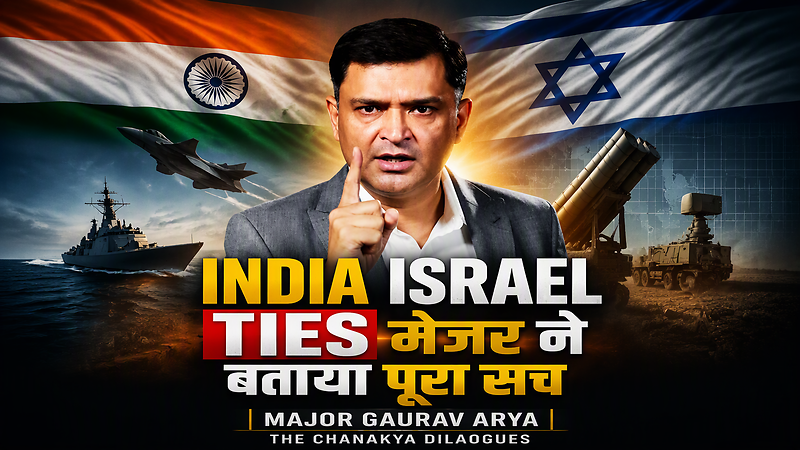
The debate surrounding India-Israel relations has intensified, with content creators expressing varied opinions on whether this partnership is beneficial or poses ethical challenges. Major Gaurav Arya from The Chanakya Dialogues asserts that India has historically supported Palestinians through humanitarian aid, yet he emphasizes that India is not an NGO and must maintain its strategic and economic interests. He argues, 'Israel supported India with weapons during wars despite lacking diplomatic relations,' highlighting a reliance on Israel for military support during critical conflicts.
In contrast, Global Politics with Dr. Qamar Cheema presents a critical view of India’s involvement in Gaza, suggesting it undermines India's image as a responsible global power. Cheema states, 'India’s Gaza involvement undermines its image as a responsible global power,' pointing out that increasing scrutiny could expose India's arms support to Israel amidst allegations of genocide. He warns that such actions may lead to reputational damage similar to what the U.S. faced after the Iraq War.
On a different note, the Israeli Ambassador to India, Reuven Azar, recently conveyed goodwill to Indians by learning Hindi and delivering a message on Hindi Day, showcasing the cultural ties that underpin the political alliance. This gesture might reflect an effort to strengthen bilateral relations beyond military cooperation.
Another perspective comes from Major Madhan Kumar, who highlights the shared cultural and religious significance of Jerusalem for Christians, Muslims, and Jews, suggesting that this shared heritage could foster deeper ties between India and Israel. He notes, 'Jerusalem's Old City is sacred to Christians, Muslims, and Jews,' which might serve as a foundation for cultural diplomacy.
Def Talks by Aadi focuses on the military aspect, reporting that Israel is considering manufacturing Iron Dome interceptors in India. He claims, 'Israel reportedly lacks sufficient production capacity for Iron Dome interceptors,' implying that this collaboration could be mutually beneficial while enhancing India's defense capabilities.
However, Cheema also critiques the arms trade, stating that India remains unapologetic about its arms exports to Israel, asserting, 'India’s arms exports to Israel comply with international rules.' This raises ethical questions about India's role in the Israeli-Palestinian conflict.
Lastly, Cheema argues that India seeks technology from Israel while offering little in return, describing India's dependence on Israeli military and IT technology. He asserts, 'India is begging for technology from Israel,' indicating a one-sided relationship that could be problematic for India's self-reliance aspirations.
In summary, the debate reflects a complex interplay of strategic interests, ethical considerations, and cultural ties, with opinions ranging from strong support for the alliance to significant concerns about its implications for India's global standing and ethical responsibilities.