India-Russia Relations: Navigating Peace Amidst Conflict
Nov 3, 2026, 20:00 IST
Summary
The debate around India-Russia relations amidst the Ukraine conflict reveals contrasting perspectives. Aadi highlights the immediate risks to Indian sailors from Russian attacks, while Dr. Qamar Cheema emphasizes India's diplomatic role, advocating for peace and mediation. Both creators illustrate the complexities of India's engagement with Russia, reflecting on the broader geopolitical implications.
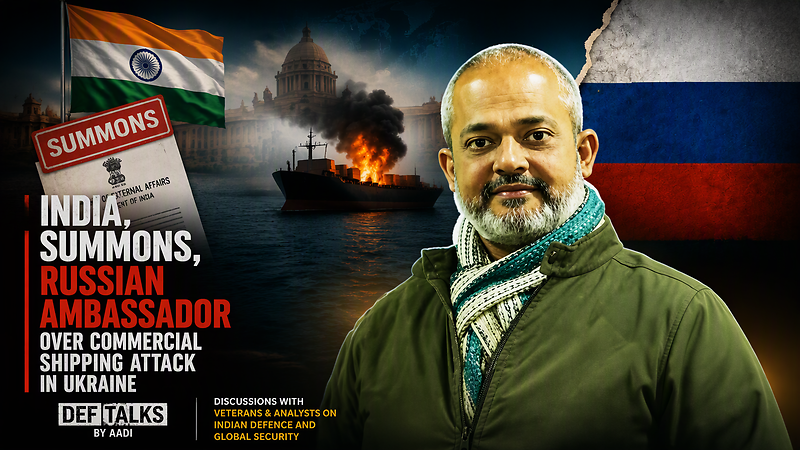
As tensions surrounding the Ukraine conflict continue, the dynamics of India-Russia relations are under scrutiny, with key voices weighing in on the implications of recent events. Aadi, a popular YouTuber known for his political commentary, emphasizes the immediate fallout of a Russian attack on commercial shipping that claimed the lives of Indian sailors. In his video, he states, 'India summoned Russia’s diplomat after an attack killed over four Indian sailors,' highlighting the precarious situation for Indian sailors operating in war zones. Aadi points out that such attacks on commercial vessels are not isolated incidents, asserting, 'Commercial shipping attacks repeatedly expose Indian sailors to risks in war zones.' This perspective underscores the vulnerabilities that arise from India's continued engagement with Russia amid the ongoing conflict.
Contrasting this, Dr. Qamar Cheema, another prominent YouTuber focusing on global politics, presents a broader view on India's role in advocating for peace. In his analysis, he discusses Prime Minister Narendra Modi's message to President Vladimir Putin, urging a transition from 'endless war' to peace. Dr. Cheema asserts, 'Modi’s message strategically targeted Washington, Europe, and upcoming United Nations General Assembly discussions,' suggesting that India's diplomatic efforts are not merely reactive but are aimed at reshaping international narratives around the conflict. He argues that Modi's advocacy for peace aligns with India's identity as a nation rooted in principles of non-violence, stating, 'India presented itself as a country shaped by Gandhi, Buddha, and commitment to peace.' This framing positions India as a potential mediator in the conflict, seeking to balance its relations with both Russia and the West.
In a related discussion, Dr. Cheema further critiques India’s diplomatic stance, noting a shift from its previous reluctance to engage in negotiations over the Russia-Ukraine conflict. He remarks, 'India now offers Russia-Ukraine mediation despite earlier rejecting such diplomacy,' suggesting that this evolution reflects a strategic recalibration. He posits that such peace mediation efforts could enhance India's soft power on the global stage, stating, 'Peace mediation can increase a nation's strength and enhance its soft power.' This perspective invites a nuanced understanding of how India's diplomatic posture is adapting to the complexities of international relations.
While Aadi highlights the immediate risks faced by Indian sailors due to military actions in Ukraine, Dr. Cheema presents a more strategic view of India’s role in advocating for peace and mediation. Both creators touch upon the broader implications of India's relationship with Russia, yet they diverge on the focus of their arguments—one on the immediate risks and the other on long-term diplomatic strategies. As the situation evolves, the interplay between these perspectives may shape the future of India-Russia relations beyond just oil, encompassing trade, security, and geopolitical positioning.