India–China Relations: Balancing Trade Dependence with Border Security Concerns
Nov 3, 2026, 18:30 IST
Summary
The debate on India-China relations reflects tensions between trade engagement and border security concerns. Sushant Sinha highlights assassination risks for leaders, while Barkha Dutt discusses improving ties through diplomatic engagements. Contrastingly, Khanversation and Dr. Qamar Cheema emphasize the need to focus on China's strategic threats and critique Modi's economic priorities, respectively. Perspectives vary on whether to engage or prepare militarily.
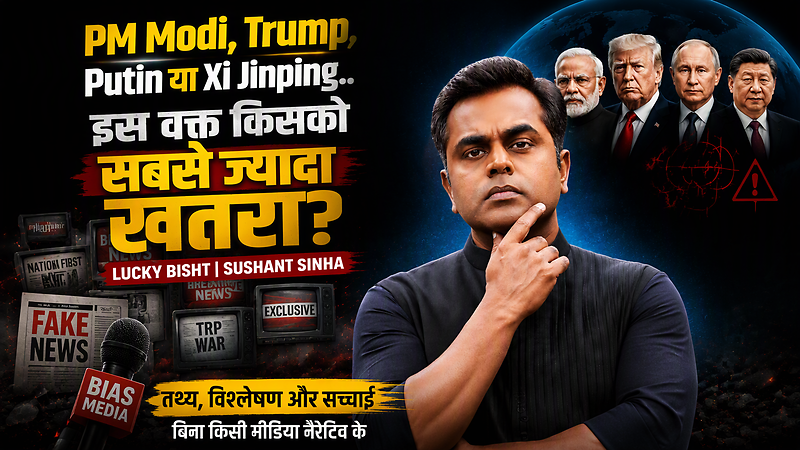
The ongoing debate around India-China relations highlights a tension between engagement through trade and the pressing need for border security amidst rising strategic rivalry. Various voices contribute to this complex discussion, each presenting differing perspectives on how India should navigate its relationship with China.
Sushant Sinha, a popular YouTuber, raises the spectre of assassination threats faced by global leaders, including India's Prime Minister Narendra Modi. He suggests that Modi's position is perilous, arguing that ‘Narendra Modi, Donald Trump, Vladimir Putin, and Xi Jinping face assassination threats,’ and emphasizes that ‘Donald Trump faces especially serious assassination risk.’ While this perspective underscores the volatile nature of leadership in international relations, it does not directly address the core of India-China relations.
On a more diplomatic note, Barkha Dutt from Mojo Story discusses the improving ties between India and China, as evidenced by the recent pilgrimage to Kailash Mansarovar organized by the Indian Embassy in China. She highlights preparations made in coordination with the Chinese government, noting, ‘Preparations include hotels, kitchens, rooms, and primary medical facilities coordinated with China.’ This suggests a willingness to engage with China despite underlying tensions.
Conversely, Khanversation argues that many Indians mistakenly focus on Pakistan rather than China, which is seen as the real challenge. They assert that ‘China now has five times India’s GDP and leads in advanced technology,’ indicating a need for India to shift its focus towards addressing the growing influence of China.
Def Talks by Aadi critiques China’s claims regarding Indian territory, arguing that ‘Chinese claims should be treated cautiously, like claims about Chinese tanks and missiles.’ This perspective emphasizes skepticism towards Chinese narratives, advocating for a more assertive Indian stance.
Global Politics with Dr. Qamar Cheema provides a critical view of Modi's government, asserting that economic priorities take precedence over confronting Chinese territorial incursions. He references General Naravane’s unpublished book, which allegedly details Chinese incursions and Modi's lack of response. Cheema states, ‘Modi prioritises economic gains over confronting Chinese territorial incursions,’ highlighting a perceived failure in India's strategic posture.
Siddhant Agnihotri from Study Glows warns of China’s potential to disrupt global markets by weaponizing its control over critical supplies. He argues that ‘China controls critical supplies and could weaponise rare earth exports against global markets,’ suggesting that India must act quickly to address these vulnerabilities.
Shubhankar Mishra raises concerns about China’s dam-building activities near Arunachal Pradesh, stating, ‘China is building the world’s largest dam about 30 kilometers from Arunachal,’ which could threaten India’s water security. This assertion aligns with a broader concern about environmental impacts and regional stability.
In contrast, Ajit Anjum points out the broader implications of military cooperation between China and Pakistan, suggesting that India’s military modernization is a necessary response to this alliance. He notes, ‘India is preparing militarily for a potential conflict with China,’ reflecting a sense of urgency in India’s defense strategy.
The debate encapsulates a spectrum of views, from those advocating for engagement and cooperation to others emphasizing caution and military preparedness. While there are common threads regarding the need for India to be vigilant against China’s rising influence, the methods and strategies proposed vary significantly, illustrating the complexities of international relations in the region.