India's BRICS Hosting: A Show of Strength or Missed Opportunities?
Sep 16, 2026, 12:00 IST
Summary
The debate surrounding India's conduct at BRICS features contrasting views. Sushant Sinha highlights India's progress since 2012, while Sakshi Joshi critiques the summit's failure to address U.S. policies and Pakistan-backed terrorism. Khanversation suggests Modi's image is at stake, and Dr. Qamar Cheema questions diplomatic decorum. The discussion reveals divisions over India's current global role and responsibilities.
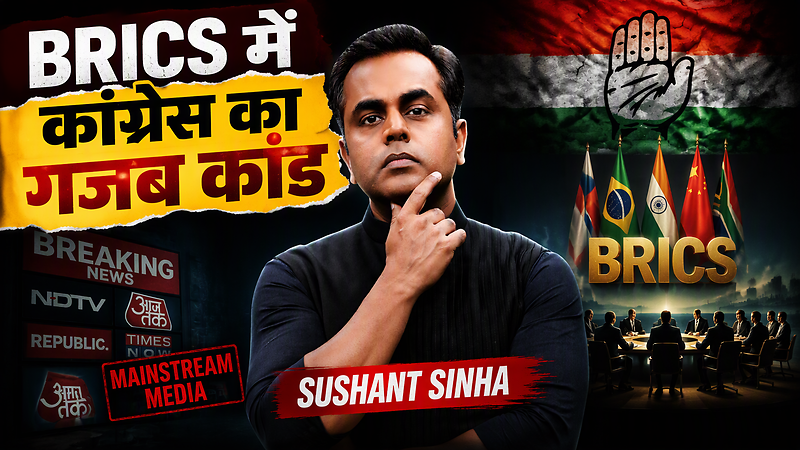
The recent BRICS summit has sparked a heated debate about India's role and conduct, with various voices weighing in on the effectiveness and implications of the event. Sushant Sinha, a popular YouTuber, argues that India's presence in BRICS is a significant achievement, especially when compared to its position in 2012, when it was deemed the 'weakest link' in the group. He emphasizes that back then, India was at risk of being downgraded to junk status by Standard & Poor's, whereas now it plays a vital role in numerous global organizations. 'India participates in all twelve major organisations, including BRICS, Quad, and G20,' Sinha asserts, urging critics to recognize the progress made under Prime Minister Narendra Modi's leadership.
Conversely, Sakshi Joshi, a journalist, acknowledges the pride in hosting BRICS but highlights shortcomings in the summit's declarations. She criticizes the lack of a strong condemnation of U.S. policies towards Iran, which she believes have contributed to rising oil prices affecting ordinary Indians. Joshi expresses disappointment that while the declaration referenced Pahalgam, it failed to address Pakistan's role in supporting terrorism against India. She urges that these issues should be at the forefront of discussions on international platforms.
Adding another layer to the debate, the Khanversation original channel suggests that Modi's attendance at BRICS is driven by a need to bolster his image amid growing criticism from the youth. This creator claims that Modi's government faced pressure from Russia and China to align with their stance, particularly regarding Israel and the U.S. 'Modi needs Xi and Putin at BRICS to restore his global-leader image,' they argue, suggesting that the Prime Minister's foreign policy is heavily influenced by the dynamics of international relations.
In a more critical tone, Dr. Qamar Cheema, a political analyst, reflects on the conduct of Indian diplomats during the summit, citing an incident where an Indian diplomat was seen eating while Iran's president was speaking. Cheema questions the appropriateness of such behavior in a diplomatic setting, implying that it undermines the seriousness of India's position on the global stage. He also critiques the portrayal of Modi as a 'Vishwaguru,' suggesting that this image may be exaggerated and not reflective of the reality of India's diplomatic efforts.
While Sinha celebrates India's current standing, Joshi and Cheema call for greater accountability and assertiveness on pressing issues. The perspectives reveal a clear divide: some see Modi's leadership as a transformative force, while others critique the government for not leveraging its position to address critical global challenges. The debate underscores the complexities of India's role in BRICS and the broader implications for its international standing as it navigates relationships with powerful nations like the U.S., China, and Russia.