India's Naval Dilemma: Protecting Seafarers in Hormuz
Nov 2, 2026, 09:30 IST
Summary
The deaths of Indian sailors in the Strait of Hormuz have ignited a debate on India's maritime security. Abhijit Chavda argues that India's withdrawal of sailors signals weakness and calls for a stronger navy. In contrast, Barkha Dutt and Faye D'Souza advocate for diplomatic responses, while Aadi highlights new monitoring initiatives. The discourse contrasts military strength with diplomatic engagement.
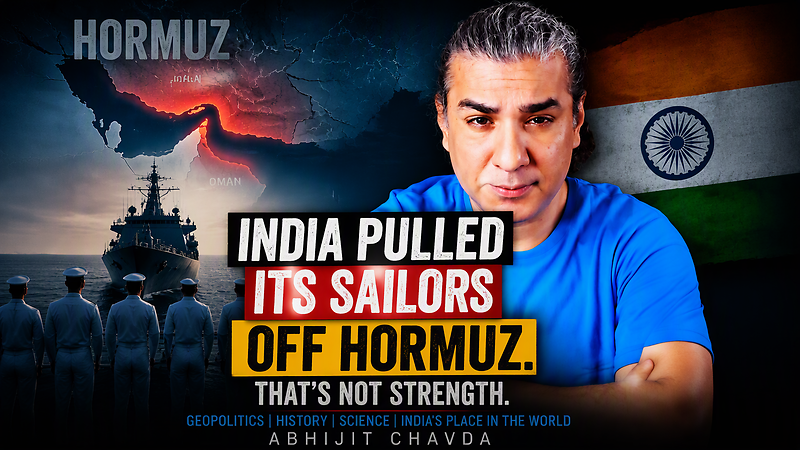
The recent deaths of Indian sailors in the Strait of Hormuz have sparked a heated debate about India's ability to protect its maritime interests. Abhijit Chavda, a popular commentator, argues that India's withdrawal of sailors from the region is a sign of weakness rather than strength. He claims, "India ordered shipowners to withdraw Indian sailors from the Strait of Hormuz," highlighting that the government is admitting it cannot protect its own citizens and interests at sea. Chavda emphasizes the need for India to enhance its naval capabilities, stating, "The solution is a dominant navy, 300 ships and submarines, and massive firepower to go with them." He believes that without such a buildup, India is merely retreating from a conflict it did not initiate but is heavily affected by.
Chavda reiterates this point in another video, detailing how both the US and Iran have targeted ships with Indian crews. He notes, "Iran killed an Indian sailor this week. In June, the Americans killed three," illustrating the perilous situation Indian sailors face. He expresses concern that while India has increased its crude imports from outside the strait, the vulnerability remains, especially with 90% of its cooking gas still reliant on it. Chavda concludes that India's strategic autonomy is undermined by its lack of military power, suggesting that India is seen as an easy target because it lacks the capacity to retaliate effectively.
In contrast, journalist Barkha Dutt reported on the immediate diplomatic responses following the death of an Indian sailor, stating that an Iranian diplomat was summoned as part of the protest against the attacks. Dutt’s coverage emphasizes the official stance of condemning the violence and calls for dialogue, reflecting the government's approach to managing the crisis through diplomacy rather than military might.
Faye D'Souza, another commentator, echoed this sentiment, stating that the Ministry of External Affairs conveyed their "strongest protest" to Iran and called for de-escalation and negotiations to ensure peace. This diplomatic angle showcases a different strategy from the military-focused approach advocated by Chavda, suggesting that India is prioritizing dialogue over direct confrontation.
Adding to the discussion, Aadi from Def Talks highlighted a new initiative by India's Ministry of Shipping and Waterways to develop a comprehensive Seafarer-First policy. This policy aims to continuously monitor the status of Indian vessels and sailors in the region. Aadi notes, "It's a good move," recognizing the urgency following the loss of several Indian lives but also implying that this is a reactive rather than a proactive measure in addressing the underlying issues.
Aadi also pointed out the summoning of the Iranian ambassador in response to the attacks, questioning why the public outcry over Iranian actions has not been as pronounced as it was for US actions in the past. He challenges the visibility of the Sailors Union of India, asking where their voice has been in this crisis. This highlights a potential gap in advocacy for Indian seafarers amidst geopolitical tensions.
Overall, the debate reveals a stark division between those advocating for military strength and strategic naval expansion versus those promoting diplomatic engagement and policy development. As tensions in the Strait of Hormuz escalate, the question remains: how can India effectively protect its seafarers while navigating complex international relations?