India's Pakistan Policy: Deterrence versus Dialogue
Nov 2, 2026, 07:30 IST
Summary
The debate over India's Pakistan policy highlights a division between military deterrence advocates, like Aadi from def talks, who supports hardline legal actions against terrorism, and Dr. Qamar Cheema, who argues for dialogue and effective narrative presentation. Cheema emphasizes the need for Pakistan to counter India's portrayal as a terrorist state while addressing military readiness and regional dynamics.
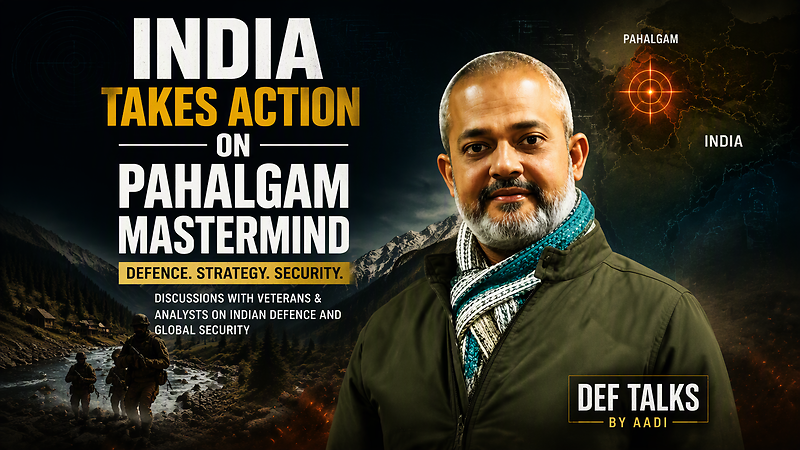
The ongoing debate surrounding India's Pakistan policy reveals stark divisions among content creators about the effectiveness of military deterrence versus the need for dialogue and de-escalation. Popular YouTuber Aadi from def talks argues for a hardline approach, stating that India has issued a non-bailable warrant against Saifullah Kasuri, the mastermind behind the Pahalgam attack. He emphasizes that this move reflects India’s commitment to legal action against terrorism emanating from Pakistan, suggesting that legal strategies are a crucial part of India's deterrence policy.
In contrast, Dr. Qamar Cheema, a political analyst and YouTuber, presents a more complex view. He contends that while India employs military deterrence, it simultaneously engages in a broader narrative battle on the international stage. Cheema argues that India’s narrative, portraying Pakistan as a terrorist state, has largely failed to gain traction globally. He claims, "India’s narrative that Pakistan is a terrorist state has failed internationally," highlighting the necessity for Pakistan to present its own narrative effectively to counter these claims.
Cheema further explores the dynamics of terrorism in Pakistan, noting that India exploits regional fault lines, particularly in Balochistan, to undermine Pakistan's stability. He states, "India exploits Balochistan's fault line by supporting groups fighting Pakistan," suggesting that India's military actions are part of a larger geopolitical strategy.
The discussion shifts to the military capabilities of both nations, with Cheema asserting that India is preparing for conflict, driven by a narrative of deterrence through punishment. He highlights that Indian Defence Minister Rajnath Singh has articulated a strategy that views attacks from Pakistan as grounds for military response, stating, "Any terror attack originating from Pakistani soil will be met with a decisive response." This view underscores a commitment to military readiness, which some argue is necessary to maintain national security.
However, Cheema also acknowledges Pakistan’s efforts to deter conflict through diplomatic channels. He mentions that Pakistan’s military leadership aims to avoid war, emphasizing, "Pakistan wants to avoid war because severe economic challenges constrain confrontation." This sentiment suggests a desire for dialogue rather than escalation, contrasting sharply with the aggressive posturing seen from India.
The complexity of these narratives is further illustrated by Cheema's assertion that India's military preparations are not solely about countering Pakistan but also about projecting power in a multipolar world. He argues, "India's primary military focus is Pakistan, not China," indicating that the perceived threat from Pakistan drives much of India's military strategy.
As both sides prepare for potential conflict, the question remains: can dialogue and de-escalation take precedence over military deterrence? Cheema posits that Pakistan's leadership must engage more robustly in international forums to counter India's narrative, arguing that without a firm response, "India's pressure would have continued to grow."
In summary, the debate reflects a fundamental disagreement about the best approach to dealing with Pakistan, with advocates for military deterrence emphasizing the need for a strong stance, while others call for a more diplomatic engagement to foster peace and stability in the region.