Iran's Conditions for Reopening the Strait of Hormuz: A Diplomatic Standoff
Sep 27, 2026, 02:30 IST
Summary
Iran has outlined conditions for reopening the Strait of Hormuz, demanding U.S. compliance to restore normal shipping within seven days. Both NDTV and Hindustan Times report that Iran will not accept coercion and emphasizes the need for credible diplomatic assurances. The U.S. is urged to respond to Iran's proposal, amid claims of past military aggression affecting current negotiations.
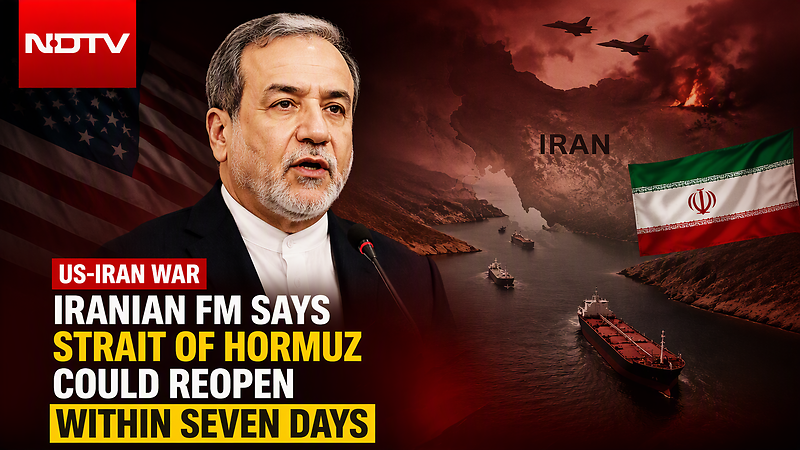
Tensions surrounding the reopening of the Strait of Hormuz have escalated as Iran lays out its conditions, placing the onus on the United States to respond. According to the news outlet NDTV, Iranian Foreign Minister Abbas Araqchi stated that Iran could restore normal shipping in the strait within seven days if the U.S. meets the outlined conditions relayed through Qatar. He emphasized that Iran will not succumb to coercion, threats, or intimidation, asserting, 'Iran does not accept coercion or threats.' This sentiment was echoed by Hindustan Times, which reported that Iran remains committed to ensuring safe navigation but insists that security cannot be restored through military aggression or economic coercion. They argue that the current insecurity in the strait is a direct consequence of aggressive actions by the U.S. and Israel.
Hindustan Times further elaborated that Iran has continuously engaged in negotiations in good faith but has been met with military aggression from the U.S., fostering a deep distrust. They argue that the U.S. must provide credible assurances to rebuild this trust if negotiations are to be fruitful. The report stresses that Iran has conveyed a concrete seven-day plan for reopening the strait, with the choice now resting with the U.S. to meet the necessary conditions.
In a similar vein, NDTV highlighted that Iran is awaiting a formal response from the U.S. regarding its proposal for reopening the strait. Araqchi noted that Iran's conditions include lifting sanctions, releasing $12 billion in frozen assets, and ceasing hostilities across various fronts, including Lebanon. He pointed out the persistent lack of trust between the two nations, stating, 'When there is a lack of trust, you cannot expect any formula to succeed.' This further complicates the diplomatic landscape, as Iran firmly believes that negotiations are the only path forward to resolve the standoff with Washington.
The core disagreement among the creators revolves around the U.S.'s role in this situation. While both NDTV and Hindustan Times agree on Iran's stance that reopening the strait hinges on U.S. compliance with its demands, they diverge slightly on the implications of U.S. actions. Hindustan Times emphasizes the historical context of U.S. military actions contributing to the current maritime insecurity, whereas NDTV focuses on the immediate diplomatic actions needed for resolution. Both sources underscore the necessity of credible diplomacy to avoid further escalation in this strategically vital region.