Is Heavy-Handed Policing the New Norm for Peaceful Protests?
Oct 18, 2026, 15:30 IST
Summary
The debate on heavy-handed policing during peaceful protests features diverse perspectives. Barkha Dutt highlights the excessive police presence, while Vinamre Kasanaa and Ajit Anjum criticize police brutality and lack of accountability. Yogendra Yadav and Faye D'Souza emphasize the students' peaceful demands, contrasting with the increasing militarization of police forces, indicating a troubling trend towards authoritarianism.
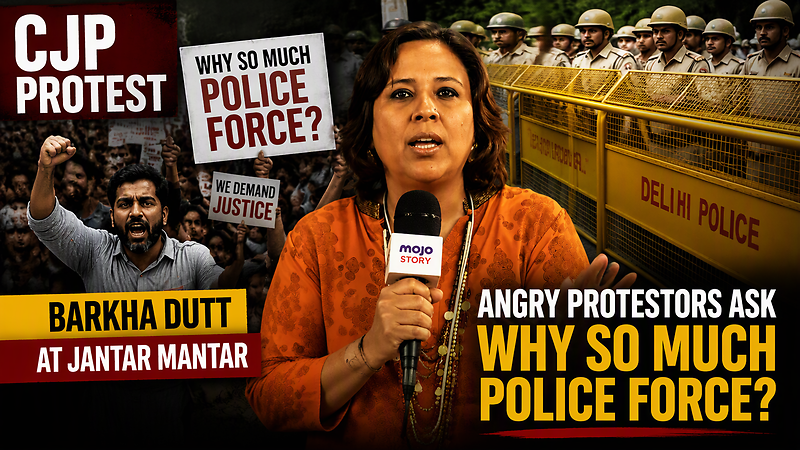
The debate surrounding heavy-handed policing during peaceful protests has intensified, with voices from various content creators highlighting contrasting perspectives. Barkha Dutt, a prominent journalist, shared her observations from the protests at Jantar Mantar, noting the significant police presence and preparations for potential violence. She emphasized, "Police deployed extra barricades, reserve forces and tear-gas preparations at Jantar Mantar," indicating a troubling trend of escalating police readiness against peaceful demonstrators. Despite overnight clashes involving some protesters, Dutt argued that the gathering was largely peaceful and student-led, stating, "Protesters describe the gathering as mostly peaceful, student-led, despite some alleged troublemakers."
In stark contrast, Vinamre Kasanaa from Dostcast pointed to the brutality of the police, claiming, "Police at Jantar Mantar sexually harassed women and struck them with batons." He described the chaotic environment, warning that growing crowds could lead to anarchy, which complicates the narrative of peaceful protest. His assertion that police "brutally beat children, leaving them injured during the Jantar Mantar incident" underlines the gravity of police actions against young protesters.
Ajit Anjum, another creator, echoed Kasanaa's sentiments, emphasizing the lack of accountability in police actions. He remarked, "The government now decides where protests can take place," suggesting that heavy policing is not just a response to protests but part of a broader strategy to suppress dissent. He highlighted the hypocrisy of permitting government violence while restricting protester actions, stating, "But protesters face beatings by police or BJP supporters without accountability."
Yogendra Yadav brought a historical context to the protests, noting that students are voicing long-standing issues of education and employment, saying, "Indian youths are protesting education and employment issues across Delhi and India." He criticized the police for their violent tactics, asserting, "Police have beaten and dragged protesters during Parliament march demonstrations," indicating that such actions are not merely reactions but systematic oppression.
Faye D'Souza, while reporting on the protests, emphasized the students' determination, stating, "Students demanded cancellation of CGL and company-conducted examinations, plus a CBI investigation," while also recounting incidents of police brutality, such as tear gas being deployed against peaceful demonstrators.
In a similar vein, Pooja Prasanna highlighted the dangers faced by protesters, noting that police have reportedly pinned women against walls and fired rubber bullets. This aligns with a broader concern raised by many creators about the increasing militarization of police forces during protests. She remarked on the apparent disconnect between governmental promises of reform and the actual treatment of protesters, pointing out the duplicity in political messaging.
Saurabh Shukla from The Red Mike argued that protests are being systematically suppressed in India, stating, "Dhruv Rathee says protests are not being permitted in India," which raises questions about the fundamental rights of citizens to voice their grievances. This sentiment resonates with many creators who view the current state of policing as an alarming trend towards authoritarianism.
Overall, the debate encapsulates a profound concern over the balance between maintaining public order and upholding the democratic right to protest. Voices from various creators converge on the idea that heavy-handed policing is becoming the default response to peaceful protest, with dire implications for civil liberties in India.