Is Modi India's Most Anti-Youth Prime Minister? A Clash of Perspectives
Oct 22, 2026, 14:50 IST
Summary
The debate over Prime Minister Modi's treatment of youth escalates as opposition leaders, including Rahul and Priyanka Gandhi, accuse him of being anti-youth amid protests at Jantar Mantar. They cite police brutality and a failure to address educational issues, while government supporters argue for law and order. The clash highlights a significant divide in perceptions of youth rights in India.
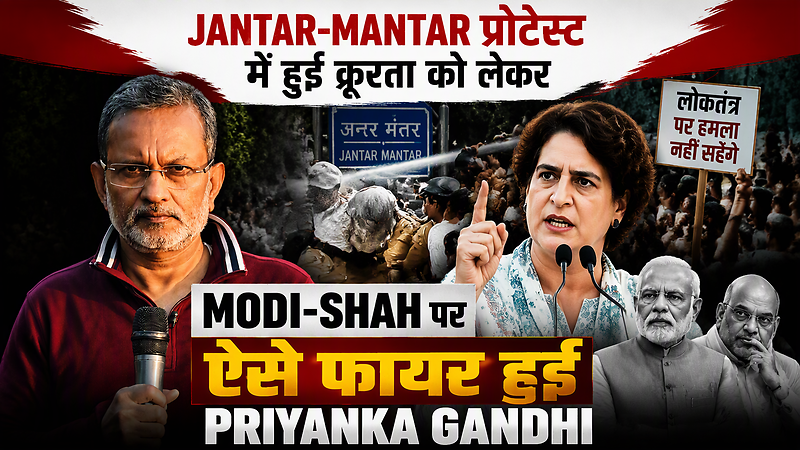
The debate surrounding Prime Minister Narendra Modi's approach to youth issues has intensified following violent protests by students at Jantar Mantar. Opposition leaders, including Rahul Gandhi and Priyanka Gandhi, have charged that Modi's government is the most anti-youth administration in Indian history, citing police brutality against peaceful protesters as evidence of systemic failures in addressing youth concerns.
Rahul Gandhi, prominent Congress leader, asserted that 'Prime Minister Modi is the most anti-youth Prime Minister India has ever had,' arguing that students demanding a fair and respectful education system are not criminals but rather individuals exercising their rights. He condemned the government's response to protests, describing police actions as undemocratic and reflective of a government that has lost touch with the youth's needs.
Priyanka Gandhi echoed this sentiment, demanding accountability for the alleged brutality during protests. In her words, 'Who ordered the guns to be fired? Did Prime Minister Modi or Home Minister Amit Shah give that order?' This pointed question encapsulates the broader concern that the government is failing to engage with legitimate student grievances, instead resorting to violence.
Akhilesh Yadav, another opposition figure, criticized the government's handling of the protests, claiming that police brutality against students indicates a significant failure to address educational issues. He remarked, 'The behavior of the police was violent; they used batons and tear gas against our youth.' This perspective aligns with Priyanka Gandhi's assertion that the government is unwilling to discuss pressing educational problems while resorting to violence against students.
The debate is further complicated by voices like that of popular influencer Faye D'Souza, who highlighted the severity of police actions, stating that students were not only beaten but also faced the threat of pellet guns and even AK-47s in Bihar. D'Souza argues that such actions demonstrate a blatant disregard for the youth's rights and well-being.
Meanwhile, popular journalist Barkha Dutt raised concerns about the government's narrative that portrays student protesters as anti-national. She emphasized that the government's failure to engage with youth issues has led to a loss of trust, urging that the Prime Minister should listen to the students' demands rather than dismiss them.
Yogendra Yadav added a nuanced perspective, critiquing the government's double standards regarding language and behavior. He pointed out that while politicians use inflammatory language without consequence, students are reprimanded for expressing their frustrations. He stated, 'You demand polite speech while using pellet guns against children.'
This clash of perspectives reveals a deep divide between the opposition's portrayal of Modi's government as anti-youth and the government's narrative of maintaining law and order. While opposition leaders emphasize the need for dialogue and reform in the education system, the government maintains that it is acting to preserve public safety.
As protests continue and tensions rise, the debate over whether Modi truly represents the youth's interests remains unresolved, with both sides entrenched in their positions. The outcome of this conflict may very well shape the political landscape in the lead-up to future elections, as the youth's dissatisfaction with the current government becomes increasingly vocal.