Is NewsClick a Tool of Information Warfare? Competing Views on Foreign Funding
Oct 22, 2026, 14:00 IST
Summary
The debate on NewsClick's role in information warfare pits Major Gaurav Arya against critics of his view. Arya claims the platform is funded by foreign entities to promote narratives detrimental to India, citing significant financial support for pro-Chinese content. However, critics argue that such accusations risk stifling dissent and oversimplifying complex media dynamics.
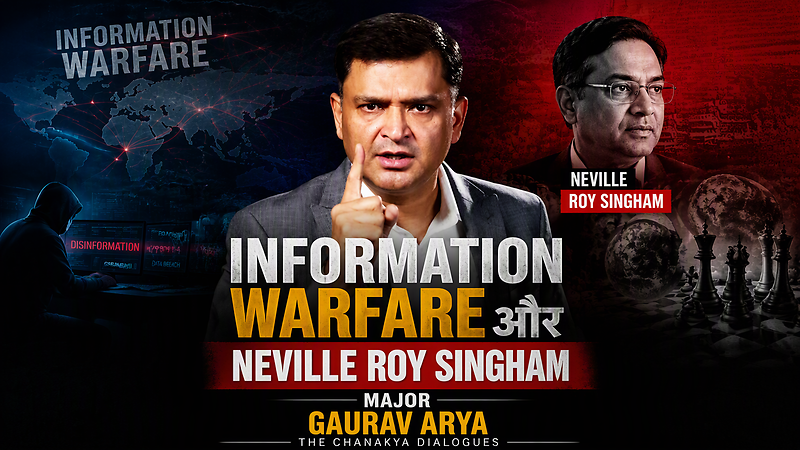
The debate surrounding NewsClick, a digital news platform, intensifies as various content creators weigh in on whether it represents a case of foreign funding or a political narrative. Major Gaurav Arya, a popular YouTuber, presents a stark view, arguing that NewsClick's narratives about Arunachal Pradesh and Kashmir are part of a broader strategy of information warfare. In his video, "Information Warfare और Neville Roy Singham," he states, "Information warfare uses media and social media to attack a country," underscoring the platform's alleged role in undermining India's sovereignty. Arya further elaborates that the dissemination of such narratives is akin to fifth-generation warfare, where the battle is fought not with weapons but through influence operations that target public perception.
In a separate video titled "NEWSCLICK को कहां से मिले करोड़ों?", Arya claims that NewsClick received ₹28 crore from two US-based entities between 2018 and 2022, alongside an additional ₹38 crore purportedly for promoting pro-Chinese content. He critiques the media's response, dismissing concerns over press freedom as mere theatrics, suggesting that these funds expose deeper ties to foreign interests. "The media's cries for freedom are like the worms coming out of wood," he remarks, hinting at a perceived deception within the narrative surrounding the platform.
Contrastingly, while Arya presents a one-dimensional view, the complexity of the situation invites further scrutiny. Critics argue that framing NewsClick purely as a foreign-funded entity oversimplifies the broader dynamics of media influence and the multifaceted nature of political narratives in India. They suggest that such allegations can be weaponized to delegitimize dissenting voices and stifle critical journalism, thus raising questions about the motivations behind the accusations.
The notion of information warfare is not new, but Arya’s characterisation aligns it closely with national security, suggesting a direct threat from narratives that diverge from official state views. His use of terms like "influence operations" and references to figures like George Soros and the Hindenburg report on Adani serve to bolster his argument, framing NewsClick as part of a larger conspiracy against India's interests.
However, the debate continues to evolve, with some voices calling for a more nuanced understanding of foreign funding in media. They argue that while foreign influence is a legitimate concern, it is essential to differentiate between genuine journalistic efforts and those that may be compromised by external interests. This perspective challenges Arya's binary view, advocating for a critical examination of all media, regardless of funding sources, to maintain a healthy democratic discourse.
Ultimately, the contention around NewsClick encapsulates a larger struggle over information, narrative control, and the implications of foreign funding in journalism. As these discussions unfold, the balance between safeguarding national interests and upholding press freedom remains a critical point of contention in India's media landscape.