Is the Election Commission Compromised? A Clash of Perspectives
Nov 1, 2026, 22:00 IST
Summary
The debate over the integrity of India's Election Commission intensifies, with figures like Saurav Das and Priyanka Gandhi accusing it of being compromised and facilitating electoral manipulation. While Congress demands accountability and the resignation of the CEC, some argue the party should also reflect on its own electoral strategies. Allegations against the CEC further complicate the discourse on electoral integrity.
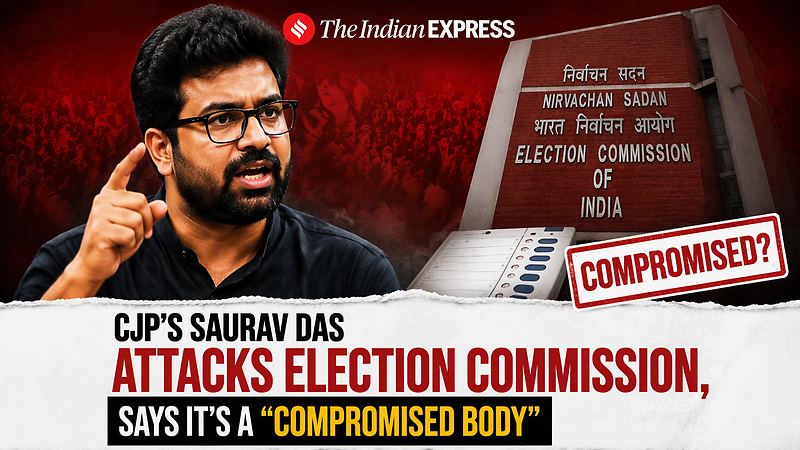
The integrity of India's Election Commission (ECI) is under intense scrutiny, with various political figures and commentators arguing over its alleged compromises. Saurav Das from Indian Express asserts that the ECI is a "compromised body," suggesting that appointments are influenced by the Modi government, leading to a lack of independence among election commissioners. He emphasizes that the current setup cannot operate without political pressure.
Echoing similar sentiments, Priyanka Gandhi, a prominent Congress leader, argues that if the Chief Election Commissioner (CEC) has engaged in illegal acts, he should face prosecution. She cites the alleged illegal deletion of 130 million voters as a criminal act against democracy, insisting that such manipulation undermines the integrity of elections. This aligns with the claims made by other Congress figures who accuse the ECI of facilitating unfair elections.
Abhishek Manu Singhvi, also from Congress, critiques the government for not addressing serious allegations against the ECI. He points out that the BJP has failed to provide any factual rebuttal to the claims made about election manipulation. Singhvi argues that both internal and external forces are compromising the ECI's integrity, asserting that the Congress demands the resignation of the CEC and plans to pursue impeachment motions.
In a similar vein, Rahul Gandhi has consistently raised concerns about electoral bias and manipulation. He highlights specific instances of voter list irregularities, particularly in states like Maharashtra and Haryana, reinforcing the notion that the ECI's actions pose a significant threat to democracy. Priyanka Gandhi reiterates this, stating that if the ECI is complicit in election manipulation, it constitutes an assault on democracy and treason.
On the other hand, some voices, like Telangana Deputy Chief Minister Bhatti Vikramarka, caution against placing all blame on the ECI. He suggests that the Congress party should also reflect on its internal issues and electoral strategies rather than solely attributing electoral failures to the ECI. This perspective introduces a nuance to the debate, indicating that the problem may not lie entirely with the commission.
Meanwhile, Yogendra Yadav from India Today calls for accountability within the ECI, suggesting that the government should take steps to restore public trust. He criticizes the appointment processes and highlights the urgent need for electoral reforms to address widespread dissatisfaction with the electoral process.
The debate extends further with allegations against Gyanesh Kumar, the CEC, regarding his supposed connections to the BJP. Former Kerala Chief Secretary Jija Thomson claims Kumar suggested he run for a BJP ticket, raising questions about the CEC's neutrality. This claim has sparked fierce political exchanges, with Congress leaders demanding Kumar's resignation.
As various political factions continue to express their concerns about the ECI, the overarching question remains: Is the Election Commission truly compromised, and if so, what measures can be taken to restore its credibility? The answers seem elusive as both sides of the debate provide compelling yet contrasting narratives about the state of electoral integrity in India.