Is the Election Commission Still a Neutral Umpire?
Oct 29, 2026, 11:38 IST
Summary
The integrity of India's Election Commission is fiercely debated, with creators like Kumkum Binwal noting historical criticisms from the BJP, while Ajit Anjum and Yogendra Yadav highlight current concerns over its impartiality and alleged voter disenfranchisement. Calls for transparency and accountability suggest a critical juncture for the Commission's role in democracy.
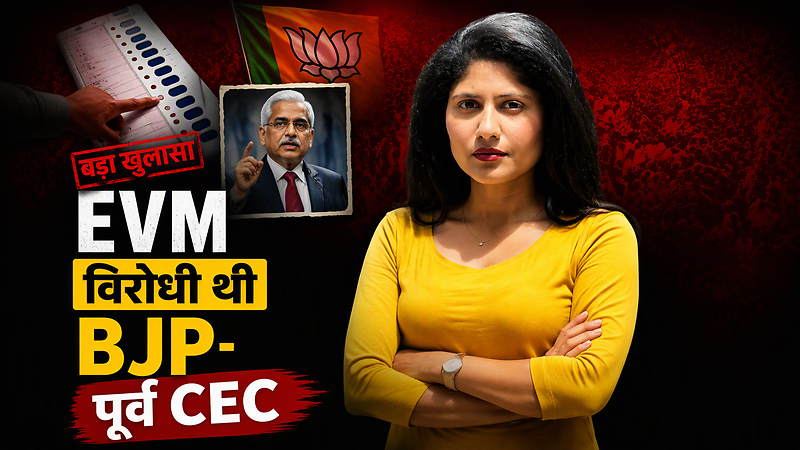
The integrity of India's Election Commission (EC) as a neutral umpire is under intense scrutiny, with various voices questioning its impartiality amid political pressures. Former Chief Election Commissioner Kumkum Binwal points out that the Bharatiya Janata Party (BJP) was once a staunch critic of electronic voting machines (EVMs), highlighting their publication 'Democracy at Risk,' which questioned EVM reliability. This historical perspective raises questions about the current state of the EC's neutrality.
Youtuber Ajit Anjum echoes concerns about the Election Commission's integrity, referencing Akhilesh Yadav's remarks following revelations about Chief Election Commissioner Gyanesh Kumar. Anjum states that the Election Commission's behavior is detrimental to democracy, especially when officials have reportedly recorded dissenting notes 14 times in 10 months, suggesting a lack of transparency and accountability.
Yogendra Yadav, a political commentator, adds a troubling dimension by claiming that two crore voters have been removed from Uttar Pradesh's electoral rolls, implying that the EC is increasingly shaping electoral outcomes rather than reflecting the will of the people. He warns of potential planned riots based on religious lines, further complicating the narrative of free and fair elections.
Anjum further critiques the appointment of former BJP officials within the EC, suggesting that it compromises election neutrality. He references a story from the Indian Express that documents discrepancies within the Commission, asserting that the credibility of the electoral process is at stake.
Pooja Prasanna emphasizes a rift within the EC itself, noting that dissent from two Election Commissioners regarding Gyanesh Kumar's decisions raises legal concerns about the legitimacy of those decisions. She argues that the Commission should publish dissent notes to restore voter trust, which has been significantly eroded.
Arfa Khanum Sherwani insists that an impartial EC is essential for democracy, stating that if the Commission becomes an extension of the ruling party, elections lose their meaning. She recounts anecdotes from Haryana and Maharashtra where electoral irregularities have been questioned, reinforcing her call for a fair electoral process.
Barkha Dutt, a prominent journalist, challenges the credibility of the EC by suggesting it acts in alignment with the BJP rather than as an independent body. She highlights the public's growing disillusionment with the electoral process and the potential consequences if this trend continues.
Amidst these criticisms, some voices, like Ajit Anjum and Prakash Raj, argue that the fight against the perceived erosion of democracy is not limited to one political faction but is a collective struggle for all citizens. They call for unity in demanding accountability from the EC and the government.
The debate reflects a deepening concern over the role of the Election Commission in upholding democratic values. As political dynamics shift, the question remains: can the EC reclaim its status as a neutral umpire, or has it become too entangled in the political fabric of the current regime?