Is the Government Afraid of CJP? Perspectives Clash
Aug 21, 2026, 06:39 IST
Summary
The debate over whether the Indian government fears the CJP movement features contrasting views from YouTuber Sandeep Deo, who highlights Modi's shaken confidence during speeches, and journalist Arfa Khanum Sherwani, who emphasizes the resilience of the younger generation against authoritarianism. Both suggest that government actions could provoke significant public unrest.
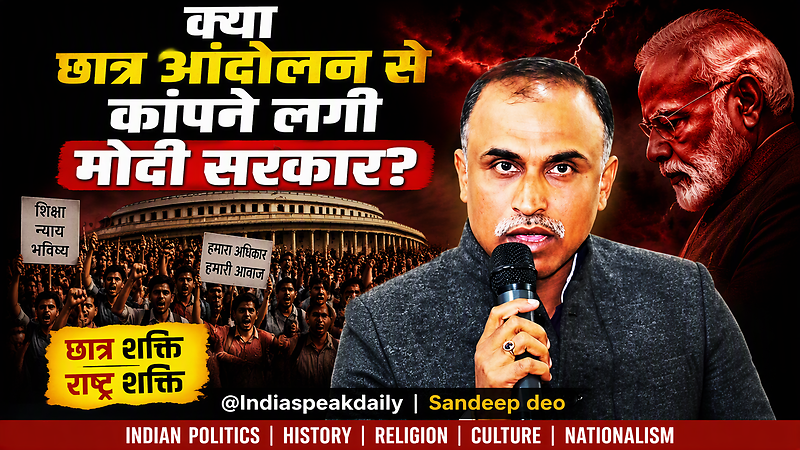
The debate around whether the Indian government is fearful of the ongoing CJP (Citizens for Justice and Peace) movement has sparked intense discussions among various content creators. Popular YouTuber Sandeep Deo from India Speak Daily claims that Prime Minister Narendra Modi's recent Independence Day speech revealed signs of weakness, suggesting that his trembling voice and faltering delivery were indicators of a government in crisis. He argues, 'This is the first time in 13 years that Modi seemed visibly shaken during his address,' pointing to a larger struggle within the Bharatiya Janata Party (BJP) in the wake of student protests. Deo highlights the party's internal changes, including the removal of Amit Malviya, suggesting that this was a response to their failure to effectively counter dissent online. He asserts that the BJP's inability to manage the narrative around these protests reflects a decline in Modi's confidence.
Conversely, journalist Arfa Khanum Sherwani presents a more direct challenge to the government's authority. In a roundtable discussion, she argues that the current generation is not intimidated by Modi or his government, stating, 'These are not the people who fear Modi and Amit Shah.' Sherwani recounts a recent protest incident where police violence against activists escalated tensions, suggesting that the government's oppressive tactics could backfire, leading to greater public unrest. She warns that the government's disregard for journalists and activists could result in widespread backlash, stating, 'If they continue to arrest journalists and activists unlawfully, they will face the consequences on the streets.'
While both creators express concerns about the government's handling of dissent, they approach the issue from different angles. Deo focuses on Modi's personal demeanor as a reflection of broader governmental fears, while Sherwani emphasizes the resilience of the younger generation against authoritarian tactics. Both agree that the government's actions could provoke significant public response, but they differ on whether this fear is rooted in the government's internal struggles or the strength of public opposition.
Ultimately, the debate encapsulates a critical moment for the Indian government. As voices from the opposition grow louder and protests intensify, the question remains: Is the government truly scared of the CJP movement, or is it simply a matter of mismanaged public relations? The answers may lie in the actions taken in the coming months, as both creators suggest that the current trajectory could lead to a major turning point in India's political landscape.