Is Uttar Pradesh's Jal Jeevan Mission Failing to Deliver Water as Promised?
Nov 24, 2026, 18:45 IST
Summary
The debate over Uttar Pradesh's Jal Jeevan Mission features accusations of corruption from YouTuber Sakshi Joshi, who claims ₹15,000 crore has vanished without work being done. Meanwhile, Pragya Mishra from Ulta Chasma critiques the lack of water tanks despite installed pipes. Both creators agree on the mission's failures but focus on different aspects of the issues at hand.
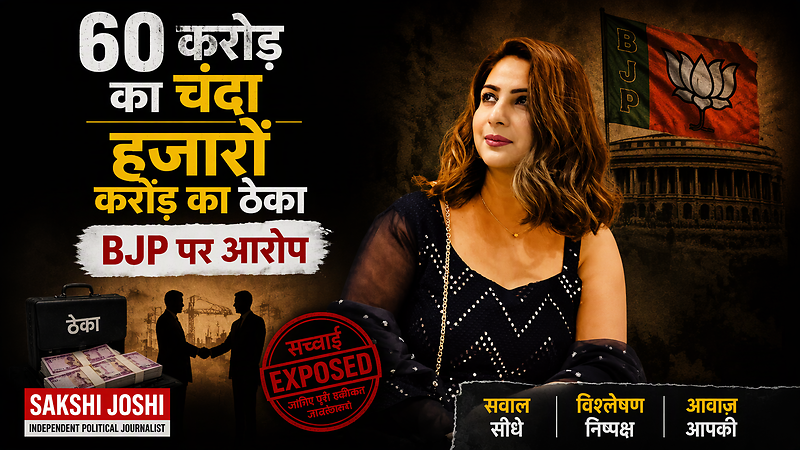
The debate surrounding Uttar Pradesh's Jal Jeevan Mission has intensified, with accusations of corruption and mismanagement dominating discussions. Popular YouTuber Sakshi Joshi claims that the mission has lost ₹15,000 crore without any significant work being done. She argues, 'This is not a minor scam; over ₹300 crore has disappeared with no pipes laid, no tanks built, and no holes dug.' Joshi points fingers at key officials like Anurag Srivastava and D.K. Singh, alleging that they have facilitated this corruption while maintaining their positions for years.
In contrast, Ulta Chasma's Pragya Mishra highlights a different aspect of the mission's shortcomings. She notes that while the BJP government has installed water pipes, the necessary supply tanks are missing. Mishra states, 'This is world-class development; there are pipes but no tanks.' She references a report shared by MP Sanjay Singh, which reveals that many villages, including those near Chief Minister Yogi Adityanath's residence, lack these essential water tanks despite displaying water-supply schedules.
Both creators converge on the theme of unfulfilled promises, with Joshi focusing on alleged financial misconduct and Mishra on infrastructural inadequacies. However, while Joshi points to a broader corruption narrative involving political donations and blacklisted companies, Mishra's argument emphasizes the logistical failures of the mission.
Sakshi Joshi further underscores the alleged complicity of government officials, suggesting that the Enforcement Directorate (ED) is ineffective in addressing these corruption claims. She asserts, 'The ED acts like a puppet of the BJP when it comes to these corrupt officials.' This claim adds a layer of political intrigue to the debate, suggesting a cover-up at the highest levels.
Conversely, Pragya Mishra's perspective does not delve into corruption but rather critiques the operational execution of the Jal Jeevan Mission. She points out that despite the installation of water pipes, the absence of water tanks renders the initiative ineffective. Her focus on physical infrastructure raises questions about the execution of projects intended to deliver basic needs.
The dialogue surrounding Uttar Pradesh's Jal Jeevan Mission illustrates a complex interplay of allegations and criticisms. While both Joshi and Mishra agree that the mission has failed to meet its promises, they diverge in their focus—one on financial corruption and the other on infrastructural oversight. As the debate continues, the effectiveness of the Jal Jeevan Mission remains under scrutiny, with citizens eagerly awaiting tangible improvements in their access to water.