Is Your Passport Proof of Citizenship? The SIR Debate Unfolds
Nov 1, 2026, 18:03 IST
Summary
The debate surrounding whether passports serve as proof of citizenship in India has intensified, with former Supreme Court Judge Sudhanshu Dhulia stating they are merely travel documents. Media outlet The Wire and various creators highlight the complexities of citizenship documentation and the bureaucratic challenges faced by individuals during the SIR exercise, emphasizing the anxiety and confusion caused by government policies.
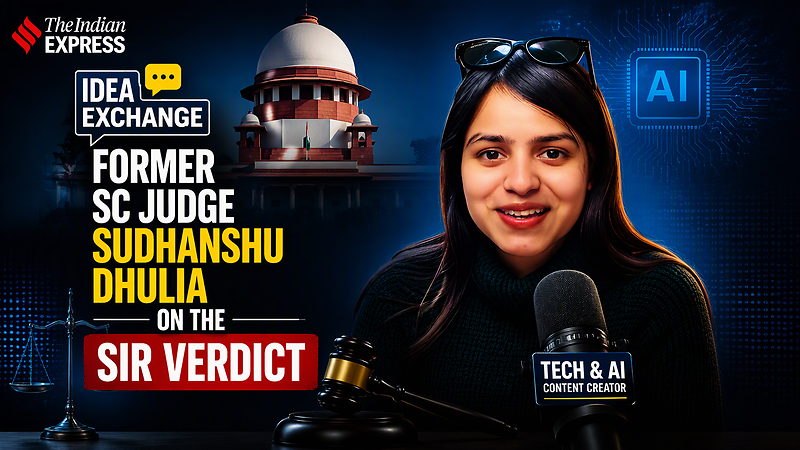
The recent discussions around the SIR (Special Intensive Revision) exercise have sparked a heated debate regarding the validity of passports as proof of citizenship in India. Former Supreme Court Judge Sudhanshu Dhulia argues that while passports are travel documents, they do not serve as conclusive evidence of citizenship. He stated, 'A passport is a travel document, not proof of citizenship,' highlighting that the burden of proof lies with authorities to establish that someone is not a citizen before attempting to remove them from the country.
In contrast, media outlet The Wire emphasizes the legal complexities surrounding citizenship. They point out that while passports are issued only to Indian citizens, recent clarifications from the Ministry of External Affairs (MEA) have stated that passports are merely travel documents. This confusion has led to anxiety among citizens regarding what constitutes valid proof of citizenship. They note that, 'Indian law permits ordinary Indian passports only for Indian citizens,' yet the MEA's assertion that passports do not conclusively establish citizenship raises questions about the documentation requirements for the SIR exercise.
Various content creators have echoed similar sentiments. Another video from The Wire mentions that the Supreme Court has affirmed that documents like Aadhaar cards, PAN cards, and even birth certificates do not provide definitive proof of citizenship. This perspective was further explored by a popular YouTuber, who remarked, 'If none of these documents can conclusively prove you are Indian, what can?' emphasizing the lack of a single universal citizenship document in India.
The debate is further complicated by the experiences of individuals affected by the SIR process. One creator from The Wire shared a personal account of being removed from electoral rolls and subsequently facing challenges in passport renewal due to a lack of acceptable identification. They stated, 'My name was deleted despite submitting an Election Commission-approved secondary-school certificate,' illustrating the bureaucratic hurdles faced by citizens.
Moreover, another creator pointed out that the government’s insistence on presenting various documents can create confusion and distress among citizens. They argued that, 'The government is creating confusion and anxiety among citizens,' and questioned the motivations behind these policies, suggesting that they may be designed to marginalize certain groups.
While some voices, like those of the former judge, focus on the legal interpretations and implications of the SIR exercise, others highlight the personal impact of these bureaucratic requirements. For instance, a creator from The Wire expressed concern that the government is not trusting its own documents, stating, 'The government keeps adding identity documents to increase pressure and marginalise citizens.' This sentiment reflects a growing frustration over the increasing complexity of proving citizenship in a nation where identity documents are becoming a point of contention.
In conclusion, the debate over whether a passport serves as proof of citizenship is emblematic of larger issues within Indian society regarding identity, governance, and the rights of citizens. As the SIR exercise continues, the implications of these discussions will undoubtedly resonate across the country, affecting countless individuals seeking to assert their citizenship rights.