'Islamic NATO': Real Threat to India or Paper Tiger?
Oct 25, 2026, 10:30 IST
Summary
The debate on the 'Islamic NATO' features contrasting views. Abhijit Chavda argues it poses a real threat to India, particularly through its ties to Iran and economic concerns for Egypt. Other creators, like Spy Games Pavneet Singh, question its effectiveness, while Khanversation highlights trust issues within the alliance. Gaurav Arya critiques its military viability, suggesting it may be more about perception than strength.
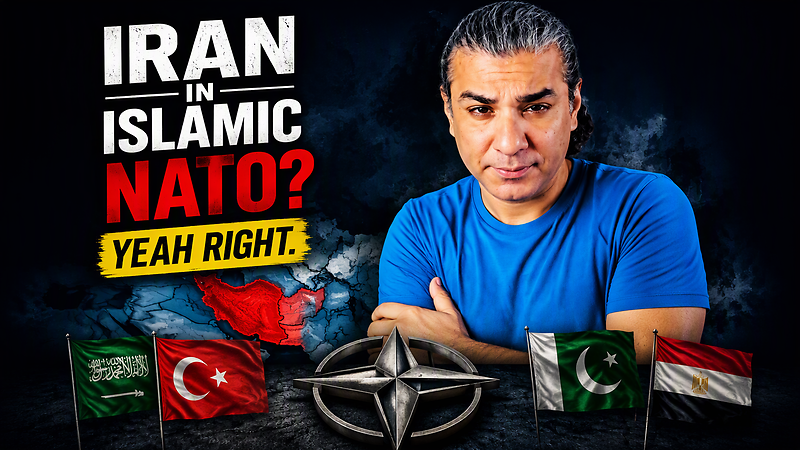
The debate surrounding the so-called 'Islamic NATO' continues to heat up, with various content creators weighing in on its potential implications for India and the broader geopolitical landscape. Abhijit Chavda, a popular YouTuber, argues in his video 'Iran in Islamic NATO? Yeah Right' that the reported invitation for Iran to join the Mecca Pact—a military alliance involving Saudi Arabia, Turkey, and Pakistan—remains unconfirmed. He highlights that these three nations are Sunni and American-aligned, while Iran is Shia and adversarial. Chavda asserts, 'You cannot put these rivals inside a mutual defense agreement and call it an alliance,' emphasizing that any attempt to include Iran would likely lead to the pact's disintegration due to mutual distrust.
In a different video, 'Trump Supports Islamic NATO (Told You So!)', Chavda elaborates that Egypt's hesitation to join the alliance is partly due to its economic ties with India, suggesting that India is a target of this coalition. He claims, 'Washington is assembling the alliance against Russia, China, and India, not Israel,' which raises concerns about India's security in the face of a united Islamic front.
Chavda's perspective is echoed by another creator, who discusses the Mecca Defense Pact in 'This defense agreement, Pakistan’s defense capabilities and global partnerships will grow stronger.' He argues that Pakistan's military strategy hinges on autonomy and cooperation with allies, indicating that the pact could indeed strengthen Pakistan's position against India. He notes, 'Pakistan seeks wartime autonomy through broader defense-industry cooperation and technology transfer.' This underscores the potential threat posed by the alliance, especially if it leads to enhanced military capabilities.
Conversely, the creator known as Spy Games Pavneet Singh raises doubts about the Islamic NATO's actual threat level in his video 'Islamic NATO and Bhooka Nanga Pakistan'. He suggests that while Pakistan is moving closer to Saudi Arabia, the effectiveness of an Islamic NATO remains questionable. He asks, 'Is there a need for India to panic?' indicating a belief that the alliance might not be as formidable as some suggest.
Khanversation, in 'Mecca Defense Pact: promise, limits and trust issues', argues that while the pact was initially met with enthusiasm, its practical benefits appear limited. He notes, 'There is still a lack of trust,' which could undermine the alliance's effectiveness. He also mentions that visiting Pakistanis were shocked to see Israelis at a Saudi briefing, hinting at the complexities and contradictions within the pact.
Further complicating the narrative, Najam Sethi in 'Mecca Defense Agreement! What are the Main Points?' discusses the lack of transparency surrounding the agreement, stating, 'Pakistan withheld the agreement’s details and rejected claims of secret provisions.' This secrecy raises questions about the pact's true intentions and capabilities.
Lastly, a creator known as Gaurav Arya critiques the overall viability of the pact, arguing that it lacks substance. He states, '0 + 0 + 0 = 0,' suggesting that the combined military capabilities of the member nations are inadequate. He implies that the alliance is more about marketing than genuine military strength.
In conclusion, while some creators assert that the Islamic NATO poses a real threat to India, others argue that it is a paper tiger, lacking the cohesion and capability necessary to challenge India's security effectively. The debate continues to evolve as more information emerges about the dynamics within this emerging alliance.