Judicial Independence or Political Puppetry? The Great Debate on India's Courts
Oct 26, 2026, 14:52 IST
Summary
The debate on India's judiciary encompasses issues of representation, accountability, and political influence. Ajit Anjum emphasizes the lack of representation for marginalized groups, while The Ranting Gola criticizes bail decisions for violent offenders. Barkha Dutt and Yogendra Yadav call for judicial integrity and constitutional protection, whereas Deepak Sharma raises concerns about political interference in judicial appointments.
The ongoing debate surrounding the role and accountability of India's judiciary has sparked a range of passionate opinions from various content creators. Central to this discussion are accusations of judicial overreach, concerns about political influence in judicial appointments, and calls for greater representation within the judiciary itself.
Ajit Anjum, a prominent political commentator, highlights a significant issue regarding representation within the Supreme Court. He argues that, "only one Supreme Court judge has come from India’s tribal communities so far," suggesting that the current system lacks adequate representation for marginalized groups. He asserts that, "the government is forming tribunals without adequate representation for Dalits, backward classes, and Adivasis," and calls for all tribunals to reserve positions for these communities, emphasizing that this lack of representation undermines the credibility of the judicial system.
In stark contrast, The Ranting Gola expresses outrage over what he perceives as a failure of the judiciary to uphold justice. He states that individuals like Swatantra Bharadwaj, who "received bail despite publicly acknowledging near-involvement in attempted murder," exemplify a broader trend where "rapists and other criminals are receiving bail while innocent people remain imprisoned." This perspective raises critical questions about the judiciary's accountability and the implications of granting bail to violent offenders, whom he claims are treated preferentially compared to innocent citizens.
Meanwhile, Barkha Dutt, a well-known journalist, presents a nuanced view on the state of the judiciary, particularly through her conversation with former High Court judges. She notes that, "the Chief Justice of India’s office deserves respect, but occupants must uphold its dignity," referencing concerns about previous Chief Justices failing to preserve judicial independence. Dutt highlights the importance of accountability within the judiciary, stating that "we do not see the independence, nor do we see a backbone of the judiciary these days."
Adding to the discourse, Yogendra Yadav calls for the Supreme Court to actively protect India's Constitution and fundamental rights, expressing disappointment in the judiciary's recent actions. He claims that "police, government, and Election Commission did not respond to election-integrity campaigners," and stresses that the Supreme Court must be empowered to enforce its own directives, which he believes have been ignored.
On the other hand, Arfa Khanum Sherwani, a legal commentator, echoes Yadav's concerns, stating that lawyers are losing faith in the Supreme Court's ability to protect constitutional rights. She cites instances where the court has failed to act decisively in critical constitutional matters, leading to a widespread sense of disillusionment among legal professionals.
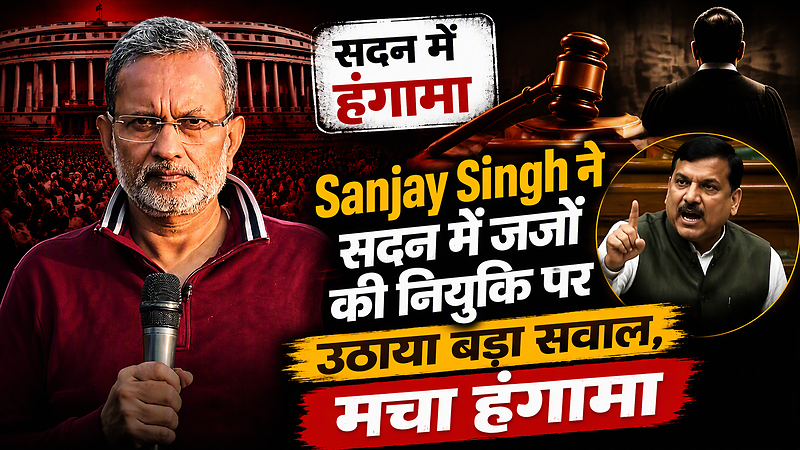
Deepak Sharma raises alarms about potential political interference in judicial appointments, citing claims by Justice Sanjay Kishan Kaul that former Chief Justice D.Y. Chandrachud sought government pre-approval for judicial appointments. He frames this as a significant threat to judicial independence, asserting that if the judiciary is beholden to political powers, it undermines the very essence of justice.
In summary, the debate over the judiciary's role in India continues to intensify, with differing views on representation, accountability, and the potential for political influence. While some advocate for greater inclusivity and representation within the judiciary, others express deep concern over judicial overreach and the implications of political meddling in judicial appointments. As these discussions unfold, the future of India's judiciary remains a contentious and critical issue.