Justice Selectivity: The Case of Swatantra Bhardwaj and the Dalit Victim
Oct 20, 2026, 17:30 IST
Summary
The debate on justice selectivity centers around Swatantra Bhardwaj's bail, contrasting with the plight of Dalit victim Nishu Azad. Abhisar Sharma argues against equating Bhardwaj's power with Azad's victimhood. Neha Singh Rathore questions the lack of accountability for Bhardwaj, while others highlight the political connections that shield him from justice, raising concerns about systemic bias.
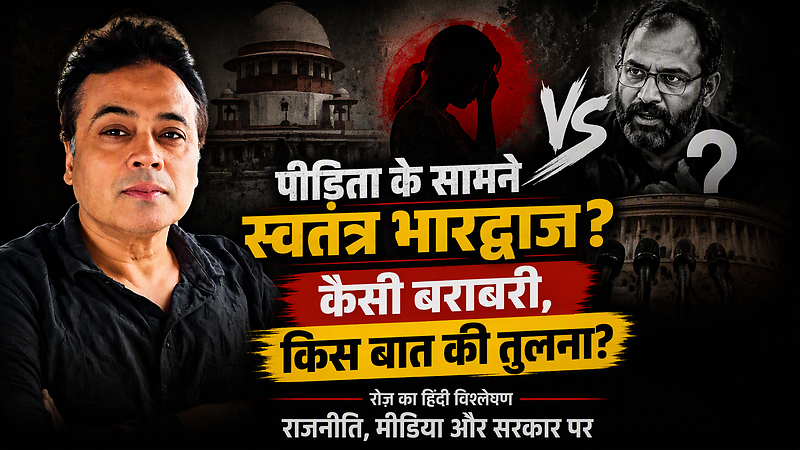
The debate surrounding the bail granted to Swatantra Bhardwaj, juxtaposed against the plight of others like Nishu Azad, raises critical questions about justice and selectivity in the Indian legal system. Abhisar Sharma, a journalist, argues vehemently against the idea of equality between Bhardwaj, a powerful figure allegedly involved in violence, and Nishu, a Dalit victim whose father was assaulted. He asserts, 'There can be no balance between a powerful person and a victim.' Sharma highlights the discrepancy in treatment, pointing out Bhardwaj's connections with BJP leaders and his apparent lack of repercussions for his actions, contrasting this with the ongoing struggles faced by victims like Nishu Azad.
Neha Singh Rathore, a popular influencer, echoes these sentiments, declaring that Bhardwaj is a 'government rioter' who openly confesses to crimes yet remains unpunished. She questions, 'When will the bulldozer action take place at Bhardwaj's home?' Her commentary suggests a systemic failure to hold powerful individuals accountable, particularly those who target marginalized communities such as Dalits and Muslims.
In a related perspective, Ulta Chasma's Pragya Mishra highlights the arrest of one of Bhardwaj's associates, indicating a network of support within political circles that shields him from justice. She notes that this associate was involved in protests and had displayed Bhardwaj's posters while also connecting him to various BJP leaders. This network raises further questions about the political implications of Bhardwaj's actions and the justice system's response.
Despite Bhardwaj's recent judicial setbacks, including being sent to Tihar Jail until September 21, his supporters argue that the charges against him are fabricated. Kumkum Binwal, another content creator, contends that the case against Bhardwaj is a result of political pressure, stating, 'This is a fake case built by opposition parties.' She insists that the legal process is being manipulated to serve political ends, undermining the integrity of the justice system.
Conversely, Pragya Mishra also brings attention to the broader implications of selective justice, referencing cases where individuals affiliated with political parties receive leniency or even bail for serious crimes. She contrasts this with the harsher treatment faced by others, like Ashutosh Ranka and Saurav Das, who were detained for hoisting the Indian flag, suggesting a troubling inconsistency in how justice is applied.
As the debate unfolds, it is clear that voices like Sharma and Rathore highlight the disparities in how justice is meted out based on social and political affiliations. The juxtaposition of Bhardwaj's situation against the struggles of victims like Nishu Azad underscores a significant concern regarding the equality of justice in India, prompting a broader discussion about accountability and systemic bias in the legal framework.