Labeling Wars: Congress and BJP Clash Over 'Anti-Hindu' and 'Communal' Accusations
Nov 2, 2026, 15:45 IST
Summary
The debate over 'anti-Hindu' and 'communal' labels between Congress and BJP reveals deep ideological divides. Sarthak Goswami condemns violent rhetoric as anti-Hindu, while Sandeep Deo argues that exposing temple looting aligns with Hindu support. Sanjay Dixit critiques Rahul Gandhi's statements on BJP, and The Ranting Gola highlights BJP's anti-Muslim sentiments. The discourse reflects broader political tensions in India.
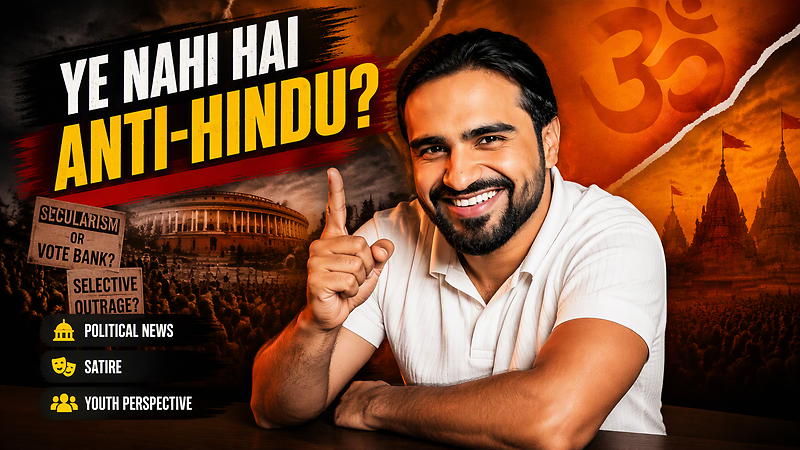
In the ongoing political tussle between the Indian National Congress and the Bharatiya Janata Party (BJP), the terms 'anti-Hindu' and 'communal' have become weapons in a labeling war. Each party accuses the other of undermining Hindu values or promoting divisive politics, revealing deep ideological divides.
Sarthak Goswami, a YouTuber, firmly asserts that there are individuals masquerading as religious leaders who promote violence, arguing, "A self-styled Jagatguru allegedly offered ₹5 crore for killing Aamir Khan". He highlights the contradiction between these threats and the core Hindu principle of non-violence, or 'Ahimsa'. Goswami emphasizes that true followers of Hinduism should reject such violent rhetoric, labeling these individuals as anti-Hindu.
On the other hand, Sandeep Deo from India Speak Daily counters that those exposing temple looting are the real supporters of Hinduism. He states, "RSS and temple looters are identified as anti-national, anti-Hindu forces," arguing that anyone who brings attention to these issues, even if not Hindu, is a Hindu supporter. This perspective positions the Congress as complicit in a broader narrative of theft against Hindu heritage, suggesting that the real communal forces are those who refuse to acknowledge this alleged theft.
The debate intensifies with Sanjay Dixit from The Jaipur Dialogues, who critiques Rahul Gandhi's claims made in Washington, where he labeled the BJP as communal. Dixit references a 2011 WikiLeaks cable that suggested Congress viewed a potential Hindu uprising as a greater threat than groups like Lashkar-e-Taiba. He argues that this perspective reveals a historical fear within Congress, which he believes continues to shape their narrative today.
Sandeep Deo further develops this argument, suggesting that Rahul Gandhi's portrayal of himself as an advocate for youth and students is undermined by his anti-Hindu image. He posits that this characterization actually strengthens the BJP's position, saying, "Rahul Gandhi’s anti-Hindu image benefits the Bharatiya Janata Party and harms Rahul himself."
In contrast, The Ranting Gola takes a more critical view of the BJP, asserting that the party promotes anti-Muslim and misogynistic sentiments. They argue that the BJP's public rhetoric contradicts its own slogans like 'Beti Bachao', stating, "Public anti-Muslim and sexist speech teaches children hatred and disrespect." This highlights a significant divide in how the parties are perceived based on their public messaging and the implications of their rhetoric.
Dixit also touches on the issue of freedom of expression, criticizing Kunal Kamra for allegedly insulting Hindu beliefs without facing backlash from his critics, indicating that political bias influences who gets called out for such actions. This assertion echoes the broader theme of selective outrage in political discourse.
Lastly, Shubhankar Mishra raises the issue of 'saffron terrorism', citing statements from prominent Congress figures like P. Chidambaram and Sushil Kumar Shinde. He points out the controversy surrounding the use of this term, suggesting that it feeds into the labeling war and further complicates the dialogue around communalism in India.
The debate over these labels is not just a matter of semantics; it reflects the underlying tensions between the Congress and BJP, as both parties seek to define their identities and the narratives surrounding Hinduism and nationalism in India.