Law and Order vs. Fear of Dissent: The Jantar Mantar Protest Controversy
Oct 28, 2026, 20:45 IST
Summary
The debate over the Jantar Mantar protests against Chief Election Commissioner Gyanesh Kumar highlights tensions between law enforcement and citizens' rights. Ajit Anjum and Yogendra Yadav criticized police actions as excessive, while Pooja Prasanna raised legal concerns about mass detentions. Barkha Dutt emphasized violations of citizens' rights, reflecting a growing divide over dissent in democracy.
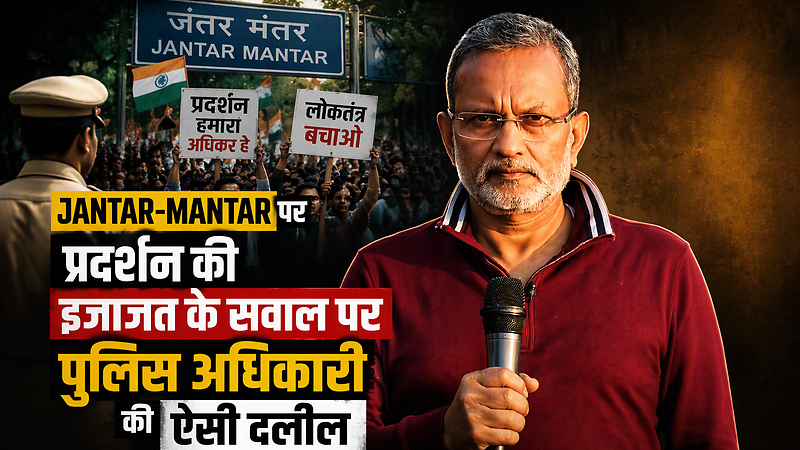
Tensions escalated during the recent protests against Chief Election Commissioner Gyanesh Kumar at Jantar Mantar, where law enforcement faced accusations of excessive force and suppression of dissent. Ajit Anjum, a journalist, highlighted that the Delhi Police withheld a protest application for four days before deploying 1,000 personnel to detain protesters on October 2, stating, "Delhi Police withheld a Jantar Mantar protest application for four days." Anjum emphasized the democratic right to protest, questioning why permission was denied to those who had applied in advance.
Yogendra Yadav, a prominent political activist, described the police's actions as "shameful" and a mark of state brutality. He recounted how police violently detained Neha Bora and himself while they were simply speaking with journalists, asserting, "Delhi Police used force against protesters advancing toward Jantar Mantar." Yadav painted a vivid picture of the chaos, noting that citizens from all walks of life had gathered to express their dissent, despite the police's efforts to disperse them.
Pragya Mishra, a reporter, echoed these sentiments, presenting stark visuals of protesters being detained, stating, "Police detained over 200 protesters overnight near Jantar Mantar." Mishra criticized the government's heavy-handed approach, questioning the legitimacy of the police's actions in a democratic country. She noted that the police were not only preventing protesters from gathering but also obstructing media coverage of the events.
Anjum later returned to the discussion, elaborating on the extensive deployment of security forces, claiming, "Delhi deployed 43,000 security personnel, including 23,000 paramilitary and 20,000 police." He expressed concern over the militarization of civil society in response to peaceful protests, questioning the rationale behind such force against citizens demanding accountability from public officials.
Barkha Dutt, a well-known journalist, emphasized the violation of citizens' rights and the legal framework surrounding such protests. She pointed out that police declared opposition gatherings illegal, defying Supreme Court orders, and remarked, "The government violated Supreme Court orders and citizens’ rights." This perspective highlights the growing concern over the balance between maintaining public order and suppressing dissent.
Pooja Prasanna, a legal commentator, provided insight into the legal implications of the police's actions. She explained that while police have the authority to maintain order, their actions must align with legal safeguards. Prasanna argued, "Detention can restrict movement without triggering formal arrest safeguards," raising questions about the legality of mass detentions that disrupt protests without formal bans.
The debate intensified with claims of police violence against protesters, as Anjum described instances of abuse during detentions, stating, "Detained male protesters faced caste, religious and sexual abuse, kicks, and overcrowding." This allegation further fueled concerns over the treatment of citizens in the context of dissent.
Yogendra Yadav and other activists demanded accountability from the government, with Yadav asserting, "The police's violent response is a war against the common people of this country." The call for Gyanesh Kumar's resignation became a rallying point for many, including Dutt, who questioned why Kumar was being protected at such a high cost to public order.
As the debate continues, the contrasting perspectives reveal a deep divide on the interpretation of law and order versus the right to dissent in a democratic society. The events at Jantar Mantar serve as a poignant reminder of the ongoing struggle for civil liberties and the role of the state in managing dissent.