Law Enforcement vs Protester Intimidation: A Heated Debate
Oct 24, 2026, 16:27 IST
Summary
The debate over law enforcement tactics in response to protests intensifies as voices like Faye D'Souza and Yogendra Yadav highlight intimidation through surveillance and threats. Dhruv Rathee shares personal experiences of being monitored, while Saurabh Shukla reports on police actions against students. Arvind Kejriwal and Neha Bora further challenge governmental overreach, emphasizing the struggle for civil liberties.
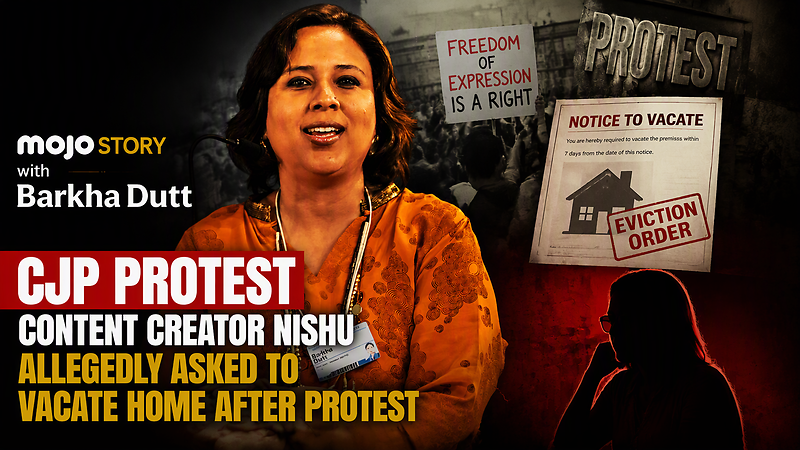
As protests escalate across the nation, a heated debate emerges over law enforcement's tactics and their impact on demonstrators. Content creator Faye D'Souza highlights serious concerns about surveillance, stating that 'the police has also... put... deployed very heavily at the site,' suggesting that the heavy police presence is more about intimidation than safety. She emphasizes that the surveillance tactics, including facial recognition systems and constant videography, serve to profile protesters rather than protect them.
In a related vein, Yogendra Yadav shares his personal experience with intimidation, noting an unidentified vehicle attempting to stop him as he heads to protest. He asserts, 'this protest will continue despite arrests as a fight to defend democracy,' underscoring a broader resistance against perceived authoritarian tactics.
Contrastingly, popular YouTuber Dhruv Rathee reveals that he has been under constant surveillance, with '50 people' monitoring his home and taking photos. He expresses a desire to join protests but fears that he may be detained if he does so, stating, 'they've unofficially threatened me with detention if I join any protest.' This highlights a chilling atmosphere for those wishing to exercise their democratic rights.
Meanwhile, Saurabh Shukla from The Red Mike reports on police actions against students, detailing how Akshay Tripathi received a ₹5 lakh notice for allegedly inciting protests. This incident raises questions about the legitimacy of police actions and their implications for public dissent. He argues that the notice, issued long after the alleged incident, is a tactic to suppress student activism.
D'Souza and Shukla both point to the growing trend of police intimidation, with Shukla noting, 'the police are threatening us with two actions against our protests,' which echoes D'Souza's assertion that the police's measures are more about control than security. The narrative of intimidation is further supported by reports of plainclothes officers filming protesters at IIT Delhi, as shared by Meghnad, who warns that such footage could be used to file FIRs against students.
In a more critical tone, Arvind Kejriwal, the Chief Minister of Delhi, condemns the Modi government for threatening FIRs against protest participants, stating, 'this country belongs to 140 crore people, not Modi's family.' His remarks resonate with many who feel that the government's response to dissent is increasingly authoritarian.
In contrast, Neha Bora from AISA declares that they will not sign peace bonds that contradict their right to protest, arguing, 'the peace bond as it is being interpreted... will not be signed by me.' This resistance to oppressive measures indicates a broader movement among activists to challenge governmental overreach.
The debate continues to unfold, with each voice contributing to a complex picture of how law enforcement's tactics are perceived as a means of intimidation rather than a legitimate effort to maintain order. As protests continue, the balance between security and civil liberties remains a contentious issue, with many activists vowing to persist in their demands for justice and accountability.