Lula's Victory and Serbian Protests: A Turning Point Against Strongman Politics?
Oct 27, 2026, 21:33 IST
Summary
The recent electoral victories of Lula in Brazil and student protests in Serbia have sparked debate about a backlash against strongman politics. Arfa Khanum Sherwani views Lula's win as a significant setback for right-wing politics, while Faye D'Souza emphasizes the nuanced nature of Serbia's protests, which united various political factions. Both perspectives highlight a potential shift away from authoritarianism.
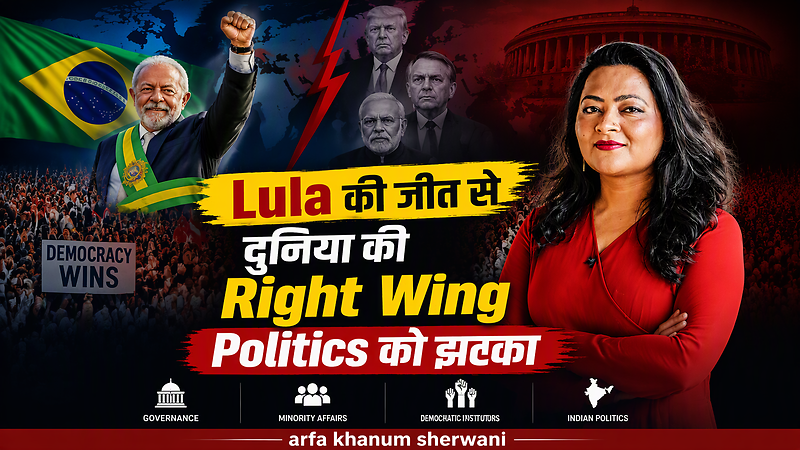
The recent political landscape in Brazil and Serbia has ignited a debate about whether these developments signify a broader backlash against strongman politics. Arfa Khanum Sherwani, a popular journalist, argues that Lula's victory represents a significant setback for right-wing politics globally. She emphasizes that despite Jair Bolsonaro's extensive backing from the United States, he lost the election, highlighting the discontent with right-wing governance in Brazil. Sherwani also draws parallels to the student protests in Serbia, where activists successfully mobilized against the political establishment, leading to the defeat of long-time leader Aleksandar Vučić. She states, 'This victory is not just about Lula but a sign of hope for countries like India, where people are growing weary of right-wing politics.'
In contrast, Faye D'Souza, a popular YouTuber, offers a more nuanced perspective on these events. While she agrees that Lula's win against Flávio Bolsonaro signals a shift, she cautions against oversimplifying the situation. D'Souza points out that the Serbian protests were not strictly a leftist movement; they united individuals across the political spectrum, which she believes is crucial for understanding the dynamics of change. She notes, 'The Serbian student movement was about accountability and reform, drawing support from the left, center, and right.' This broader coalition, according to D'Souza, may be key to sustaining the momentum against authoritarianism in both nations.
Both creators highlight the significance of Lula’s election, with Sherwani framing it as a triumph over Bolsonaro’s oppressive regime, which she claims had undermined democracy by capturing media and state institutions. She asserts, 'Lula is a figure of hope for those who care for justice and marginalized communities.' On the other hand, D'Souza acknowledges Lula's victory but emphasizes the importance of understanding the specific context of each country’s political landscape. She states, 'While Brazil shows a pushback against right-wing politics, we must not forget the complexities of these movements and the diverse motivations behind them.'
The dialogue around these political shifts illustrates a growing discontent with authoritarian rule, yet the paths toward reform appear distinct. Sherwani sees Lula's success as part of a larger global trend of rejecting right-wing populism, while D'Souza calls for caution in drawing direct comparisons between Brazil and Serbia, highlighting the unique characteristics of each situation. As both nations navigate their political futures, the conversations surrounding these events suggest a potential pivot away from strongman politics, albeit with different narratives and implications in play.