Modi government's silence amid Wangchuk's hunger strike: A test of resolve or indifference?
Jul 20, 2026, 06:12 IST
Summary
As Sonam Wangchuk's hunger strike reaches twenty days, voices from various creators express concern over the Modi government's silence. Ajit Anjum praises Wangchuk's Gandhian protest spirit while criticizing the government's inaction. Dhruv Rathee warns of a tragic outcome if silence persists. The debate highlights the urgent need for government accountability and dialogue in a democratic society.
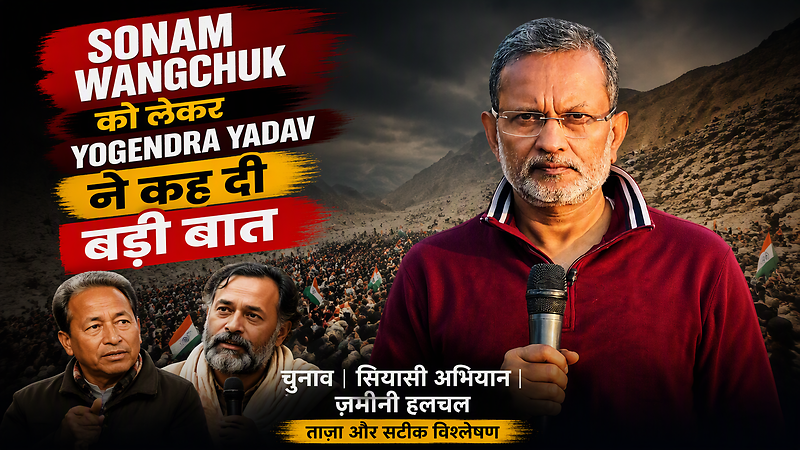
As Sonam Wangchuk's hunger strike entered its twentieth day, a chorus of voices has emerged questioning the Modi government's silence and inaction. Influencer Ajit Anjum highlights the gravity of Wangchuk's protest, suggesting that it has revitalised a nationwide movement. In one of his videos, Anjum states, 'Sonam Wangchuk’s 20-day fast revived the movement nationwide,' praising the fast as a true expression of Gandhian spirit and claiming the government has been forced to accept defeat after its soft approach failed.
Wangchuk himself has been vocal about the physical toll his protest has taken, revealing that he has lost approximately 9.5 kilograms and expressing concern over the fate of students amid rising suicide rates in India. He argues, 'Public protests over onion prices toppled India’s central, Delhi, and Rajasthan governments,' underscoring the urgency of his cause. His health has deteriorated significantly, and he notes, '20% of my body has gone,' emphasizing the dire situation.
Anjum's reports also reveal that Wangchuk’s supporters are planning a significant march towards Parliament, urging political participation. He notes, 'Supporters plan a March 20 Parliament march and seek political-party participation,' hinting at a growing movement that the government cannot ignore. However, the Modi government's continued silence raises questions about its resolve. Another perspective from Anjum criticizes this silence, stating, 'The Modi government refuses to yield before hunger strikes or protests,' suggesting a stubbornness in the face of public dissent.
Wangchuk's wife, Geetanjali Angmo, adds a personal dimension, expressing concern for her husband's health as he continues to advocate for students. She states, 'Sonal Wangchuk’s condition is deteriorating,' highlighting the emotional weight of the protest.
Further complicating the narrative, popular YouTuber Dhruv Rathee draws parallels to the tragic case of Professor G.D. Agrawal, who died after a prolonged hunger strike in 2018. He warns, 'If Wangchuk faces government inaction, it could lead to a similar outcome,' urging citizens to rally behind Wangchuk and participate in upcoming protests.
In contrast, some voices question whether the government is genuinely indifferent or strategically silent. Anjum argues that the government’s inaction may be a deliberate tactic to avoid yielding to protests, stating, 'The government’s silence is like a strategy to maintain authority.' He raises concerns about potential force being used to disperse crowds, indicating a possible escalation of tensions as the March 20 march approaches.
As the situation unfolds, it is clear that Wangchuk’s hunger strike has ignited a debate not just about his cause, but about the broader implications for democracy and government accountability in India. Many, including Anjum, stress that the government should engage in dialogue rather than silence, asserting that 'a good democracy requires a sensitive government and fearless, outspoken citizens.' This sentiment resonates across various perspectives, revealing a collective frustration with the current state of governance.
Ultimately, the question remains: will the Modi government respond to Wangchuk's call for accountability, or will it continue to stand firm in its silence? As supporters gather at Jantar Mantar, the stakes have never been higher, and the public's response may very well dictate the future of this ongoing struggle for educational reform and government responsiveness.