Mohan Bhagwat in New York: Diaspora Outreach or Exporting Hindutva?
Sep 10, 2026, 12:30 IST
Summary
Mohan Bhagwat's visit to New York has sparked debate on whether it represents genuine diaspora outreach or an export of Hindutva. Abhisar Sharma highlights protests against Bhagwat, while Mayor Zohran Mamdani opposes the RSS event, emphasizing secularism. Protests question the RSS's violent history, and creators argue the organization's agenda threatens India's pluralism.
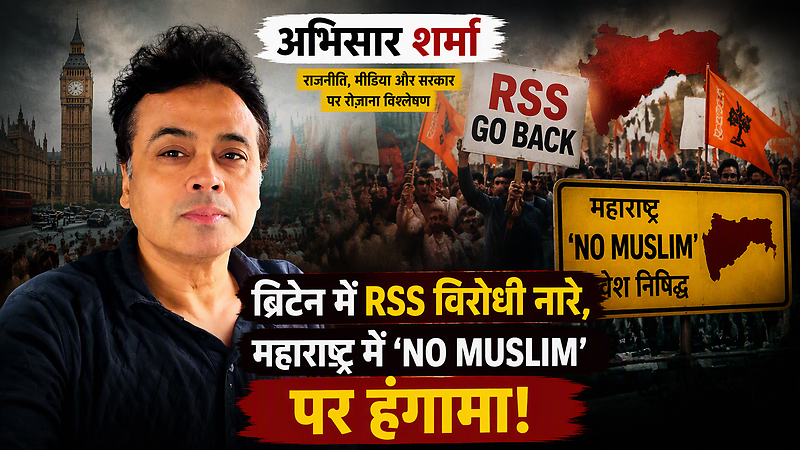
The recent visit of Mohan Bhagwat, the chief of the Rashtriya Swayamsevak Sangh (RSS), to New York has ignited a heated debate over whether his presence signifies a genuine outreach to the Indian diaspora or an attempt to export Hindutva ideology abroad. Abhisar Sharma, a prominent journalist, argues that Bhagwat's international appearances are marred by protests that reflect growing discontent with the BJP's divisive politics. In his video, he highlights that Bhagwat faced protests not only in the United States but also in Britain, stating, 'Mohan Bhagwat faced protests in Britain and previously the United States.' He also points out that the Vishwa Hindu Parishad (VHP) in Maharashtra called for excluding Muslims from Navratri celebrations, which he claims impacts India's international reputation.
On the other hand, Zohran Mamdani, New York's mayor and the first Indian American to hold the position, has publicly opposed the RSS event at Madison Square Garden. He asserts that the RSS does not represent a secular institution, claiming, 'They lack commitments to human rights.' Mamdani's opposition reflects his vision of India as a pluralistic society, a sentiment echoed in a separate video by Faye D'Souza, who states that Mamdani finds the rise of exclusionary movements troubling. Both Mamdani and Sharma express concern over the implications of Bhagwat's visit, indicating that it may further alienate minority communities in India and abroad.
Deepak Sharma, a political commentator, supports Mamdani's stance, emphasizing the mayor's jurisdiction limitations regarding private events. He notes, 'Mamdani said the city could cancel the private event if authorized,' highlighting the challenges local leaders face in opposing such gatherings. The embarrassment faced by event organizers is palpable, as the public outcry continues.
Protests outside the event further illustrate the dissent against the RSS's agenda. Footage shared by Barkha Dutt shows demonstrators questioning the RSS's actions, with chants asking, 'How many people did you kill today?' This confrontational approach captures the anger of those who view the RSS as a threat to India's secular fabric.
Khanversation, a content creator focusing on social issues, argues that the RSS's rhetoric promotes a vision of India that equates Indian identity solely with Hindu identity, effectively excluding Muslims, Christians, Sikhs, and Buddhists. This perspective underscores the fears surrounding the RSS's influence, as the organization is perceived to push for a Hindu-only India, which many view as fundamentally anti-pluralistic.
In conclusion, the debate surrounding Mohan Bhagwat's visit to New York is deeply intertwined with broader discussions about the RSS's role in shaping India's identity on the global stage. While some see this as an opportunity for diaspora engagement, many voices, including those of political leaders and activists, caution against the potential export of an exclusionary ideology that could further divide communities both in India and abroad.