Neha Bora Challenges CEC: A Clash of Student and Election Politics
Oct 13, 2026, 14:00 IST
Summary
Neha Bora's challenge against Chief Election Commissioner Gyanesh Kumar has sparked a significant debate on electoral integrity. Faye D'Souza points to systemic issues with voter rolls, while Ajit Anjum accuses the CEC of colluding with the BJP. Bora demands Kumar's resignation, highlighting the disproportionate police presence at protests. This clash underscores the struggle for democratic rights in India.
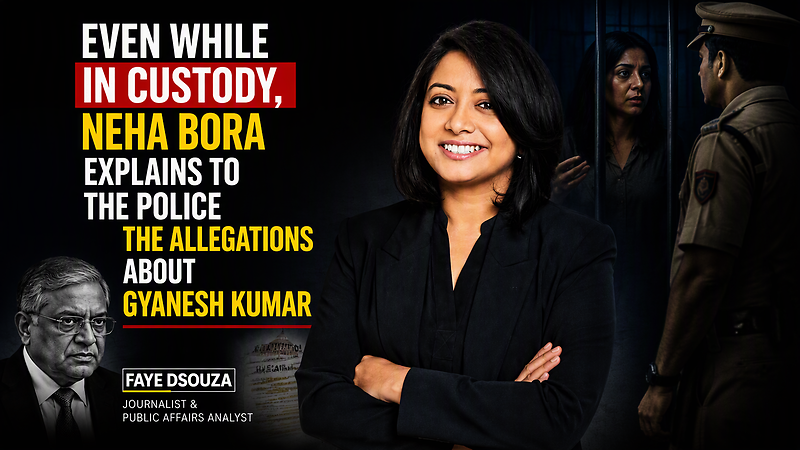
The ongoing clash between student activist Neha Bora and the Chief Election Commissioner (CEC) Gyanesh Kumar has ignited a heated debate about the integrity of India's electoral processes. Popular YouTuber Faye D'Souza highlights significant issues raised by Bora regarding the inability of Electoral Registration Officers (EROs) to access and edit voter rolls, stating, 'Electoral Registration Officers cannot accept or edit voter rolls despite valid documents.' This systemic problem, she claims, has been reported across states like Goa, West Bengal, and Gujarat, with no response from Gyanesh Kumar to these complaints.
Ajit Anjum, a journalist, adds another layer to the debate, accusing the CEC of collusion with the ruling Bharatiya Janata Party (BJP). He asserts that the CEC is facilitating the BJP's rise to power while simultaneously protecting its interests, stating, 'You are directly saying that the CEC will bring the BJP to power, then the BJP will protect the CEC.' Anjum argues that the actions of the CEC undermine voters' rights through undemocratic means and that authorities must tolerate protests against this corruption.
Bora herself has been vocal about her demands for accountability from the CEC. In a video titled "Gyanesh Kumar HAS To Resign...", she calls for Kumar's removal, stating that protesters plan to gather at Jantar Mantar to demonstrate against the alleged injustices. She emphasizes that the deployment of thousands of police officers to protect Kumar is disproportionate, questioning, 'Thousands of police were deployed to protect one person, Gyanesh Kumar.'
In another segment, Ajit Anjum echoes Bora's sentiments by drawing attention to alarming statistics about voter disenfranchisement, claiming, 'Bihar allegedly lost 13 crore voter names, with 65 lakh records altered.' He suggests that the current political climate resembles an undeclared emergency, likening it to historical abuses of power under former Prime Minister Indira Gandhi.
The perspectives converge on a central theme: the perceived erosion of democratic processes in India. While Bora and Anjum focus on the immediate implications of Kumar's actions, Faye D'Souza underscores the structural issues within the electoral system that allow such scenarios to unfold. This multifaceted debate raises critical questions about the future of student activism and its role in shaping electoral integrity in India.
As the protests gain momentum, the clash between Neha Bora and the CEC represents not just a confrontation between student politics and election politics but also a broader struggle for democratic rights in an increasingly complex political landscape.