Opposition Leaders at Jantar Mantar: Genuine Support or Political Theatre?
Oct 14, 2026, 21:02 IST
Summary
The gathering of opposition leaders at Jantar Mantar sparks debate over genuine support versus political opportunism. Ajit Anjum emphasizes Congress's focus on student health, while Priya Saroj passionately supports the protests. Shashi Tharoor commends the youth's efforts, contrasting with Barkha Dutt's call for students to reclaim the narrative. The involvement of political figures raises questions about their true intentions.
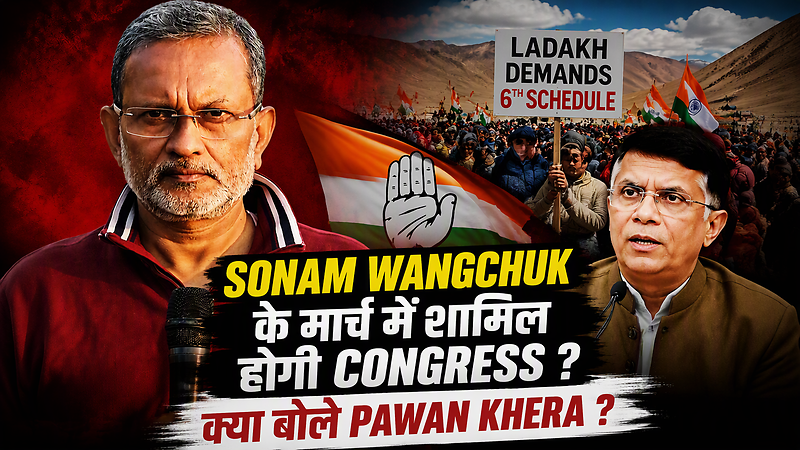
As opposition leaders gather at Jantar Mantar, a fierce debate emerges over whether their presence is a show of solidarity or merely a political photo-op. Ajit Anjum, a popular journalist, highlights Congress's cautious approach regarding participation in the March 20 protest, emphasizing that they prioritize Sonam Wangchuk's health and have yet to confirm their involvement. He notes, 'Our concern is for Sonam Ji's health... we will raise the issue strongly in Parliament.' Anjum's assertion underscores the party's commitment to addressing the concerns of students while maintaining a strategic distance from the protest's political undertones.
In contrast, Priya Saroj, a member of the Samajwadi Party, passionately supports the protests, stating that the government's inaction on issues like paper leaks and job delays is crushing the dreams of millions of youths. She urges citizens to join the protest, declaring, 'This fight is for millions of youth.' Her call to action reinforces the urgency of the students' plight, framing the protests as a necessary response to governmental negligence.
Shashi Tharoor, a prominent Congress leader, adds another layer to the discussion by commending the persistent efforts of young protesters. He argues that the resignation of the Education Minister is a significant moment, asserting that 'when citizens raise their voices peacefully, governments cannot remain indifferent.' Tharoor stresses that while the resignation is a step forward, it is not sufficient to restore trust in the examination system, which requires comprehensive reforms and accountability.
Barkha Dutt, a well-known journalist, questions the political involvement in the protests, suggesting that students must reclaim the narrative. She emphasizes the need for independent student groups to voice their demands without political interference, warning that the movement risks losing its core message amidst political affiliations. This sentiment resonates with Najam Sethi, who notes that the success of the movement hinges on the involvement of political parties, stating, 'The success of this movement depends on how deeply political parties engage with it.'
Faye D'Souza captures the moment as VCK chief Thirumavalavan and NCP President Sharad Pawar visit the protest site, highlighting the increasing political attention on the student movement. However, this raises concerns about whether their involvement serves the students' interests or their own agendas.
As the debate unfolds, the perspectives illustrate a complex interplay between genuine support for student rights and the potential exploitation of their struggles for political gain. While some leaders advocate for accountability and reform, others caution against the dilution of the movement's objectives in the face of political opportunism. Ultimately, the gathering at Jantar Mantar represents a pivotal moment in India's political landscape, with students at the forefront of demanding change.