Protest Policing: Rights of Demonstrators vs. Law Enforcement Tactics
Oct 18, 2026, 13:51 IST
Summary
The debate over protest policing in India highlights the clash between protesters' rights and law enforcement tactics. Ajit Anjum criticizes police demands for identification, while Sakshi Joshi reports on police violence against students. Faye D'Souza emphasizes the use of tear gas and water cannons, contrasting with Sonam Wangchuk's call for police solidarity. The discussion raises essential questions about democracy and civil liberties.
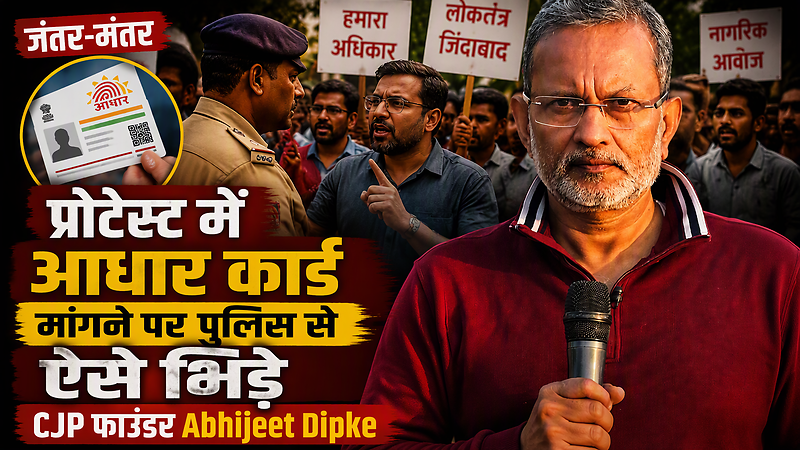
As protests escalate across India, the debate over the policing of demonstrations has intensified, pitting the rights of protesters against public-order enforcement. Various voices in this discussion highlight the complexities and consequences of police actions during these events.
Ajit Anjum, a prominent journalist, raises concerns about police checks on attendees at the Jantar Mantar protest, questioning the legality of demanding Aadhaar and PAN cards. He argues, "Police stopped many people and checked their Aadhaar cards near the protest," emphasizing that citizens should not need identification to exercise their rights to protest.
Contrastingly, Sakshi Joshi, a popular content creator, reports on the physical force used by police against protesting students. She recounts that "students say they had been hungry for two days during the protest" and that police responded with lathi-charges after some students crossed barricades. This portrayal of police violence is echoed in another video by Joshi, where she reveals that police officers justified their actions, stating they had acted appropriately after media personnel had left, implying a deliberate attempt to avoid scrutiny.
Further complicating the narrative, Saurabh Shukla from The Red Mike discusses the broader implications of police actions. He describes a scene where police officers allegedly beat demonstrators, stating, "Thirteen police officers allegedly beat a demonstrator with fists and elbows." This highlights the brutality faced by peaceful protesters and questions the limits of lawful enforcement.
Faye D'Souza also contributes to the discourse by illustrating police responses during protests. In one instance, she notes that "Haryana police used water cannons and tear gas shells against protesting farmers," capturing the aggressive tactics employed to disperse crowds. D'Souza emphasizes that such measures lead to an escalation of tensions rather than resolution.
On the flip side, Sonam Wangchuk, an educator and environmental activist, suggests a more constructive approach. He advocates for police to demonstrate goodwill, proposing, "Delhi Police serving tea to protesters could demonstrate solidarity with citizens." This perspective underscores the potential for collaboration rather than conflict between law enforcement and the public.
In a critical view, Yogendra Yadav highlights the manipulation of evidence by police during protests, claiming, "Police are shown planting evidence inside artist Srishti’s home." This assertion raises serious concerns about police integrity and the lengths to which authorities may go to suppress dissent.
As these varied perspectives unfold, the discourse surrounding the policing of protests continues to evoke strong emotions. While some advocate for stringent enforcement to maintain public order, others demand respect for civil liberties and the right to protest without fear of violence or repression. The tension between these two positions reflects a broader struggle for democratic freedoms in contemporary India.
Ultimately, the debate underscores a crucial question: how can a balance be struck between maintaining public order and upholding the rights of citizens to peacefully protest? This remains an ongoing challenge, as both sides continue to assert their narratives in the face of escalating tensions.