Rahul Gandhi's Ideological Clash with the RSS: Political Punching Bag or Ideological Adversary?
Nov 5, 2026, 16:51 IST
Summary
The debate over Rahul Gandhi's confrontation with the RSS highlights ideological divides. Ajit Anjum criticizes Modi and the RSS's hypocrisy, while Sanjay Singh points to the RSS's historical reluctance to embrace nationalism. Influencer Sakshi Joshi labels RSS members as cowards, and Rahul Gandhi accuses the BJP of marginalizing communities. The discourse reveals a complex ideological struggle for India's future.
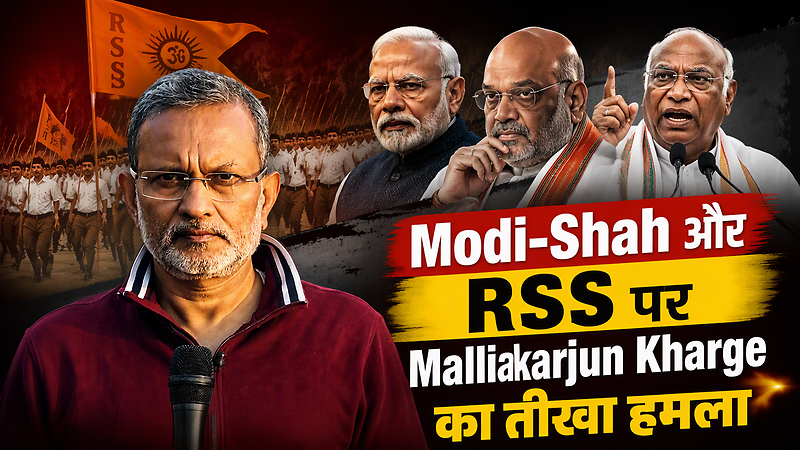
The ideological battle between Rahul Gandhi and the Rashtriya Swayamsevak Sangh (RSS) has intensified, with prominent voices voicing their opinions on the matter. Ajit Anjum, a journalist, highlights the dangers posed by Prime Minister Narendra Modi and Home Minister Amit Shah, stating that they 'will ruin India and leave nothing for future generations.' He criticizes the RSS for portraying itself as a social-service organization while indulging in religious ceremonies at the Ram Temple. This perspective frames the RSS as hypocritical, presenting a façade of service while engaging in divisive politics.
In a separate video, Anjum discusses how Sanjay Singh, a member of the Aam Aadmi Party, claims that the RSS has a troubling history with the Indian national flag. Singh asserts that the RSS headquarters avoided flying the tricolour for 52 years, referencing a letter from RSS founder Dr. Hedgewar instructing members to fly only the RSS flag on January 26, 1930, instead of the national flag. This claim underscores the RSS's historical reluctance to embrace symbols of Indian nationalism, which Singh argues reveals a fundamental betrayal of the country.
Sakshi Joshi, a popular influencer, takes a more combative stance, labeling RSS members as 'cowards' and accusing them of serving foreign interests, particularly the United States. She insists that the RSS is 'India’s real enemy' and expresses confidence that the Congress Party will ultimately triumph over such forces. Joshi's rhetoric paints a vivid picture of an ideological struggle, positioning the Congress as defenders of the nation against what she perceives as the cowardice of the RSS.
Rahul Gandhi himself has been vocal about the exclusionary tactics of the BJP and RSS, accusing them of marginalizing significant sections of society. He argues that the BJP has threatened various religious and ethnic groups, asserting that they have created an environment of fear and oppression. Gandhi's assertion that 'the BJP told Adivasis their land could be taken' illustrates the perceived dangers of their governance, which he claims fosters division rather than unity.
In another instance, Gandhi labels the RSS as 'clowns' who lack an understanding of modern India, stating that many Indians act cowardly in the face of the RSS's influence. His criticism emphasizes the need for a contemporary understanding of Indian identity that transcends ancient history, suggesting that the RSS is out of touch with the current socio-political landscape.
Sanjay Dixit from The Jaipur Dialogues adds to the discourse by highlighting Gandhi's claim that the RSS is patriarchal, which adds a layer of critique regarding the organization's internal dynamics and its implications for societal gender roles. This perspective aligns with the broader critique of the RSS as not only politically divisive but also socially regressive.
The debate surrounding Rahul Gandhi's confrontation with the RSS reveals a complex interplay of ideological warfare and political strategy. While voices like Anjum and Singh focus on historical grievances and the hypocrisy of the RSS, influencers like Joshi and Gandhi frame the conflict in terms of moral courage and societal inclusivity. The perspectives underscore a profound ideological rift, with each side claiming to represent the true spirit of India against the perceived threats posed by the other.