Rahul Gandhi's Warnings: Accountability or Intimidation of Institutions?
Oct 13, 2026, 20:42 IST
Summary
Rahul Gandhi's warnings to the Election Commission have ignited a debate on accountability versus intimidation. Ajit Anjum and Faye D'Souza assert that Gandhi's call for transparency is vital for democracy, while Najam Sethi and Sanjay Dixit question the effectiveness and motives behind the protests. The perspectives highlight concerns over the integrity of India's electoral institutions.
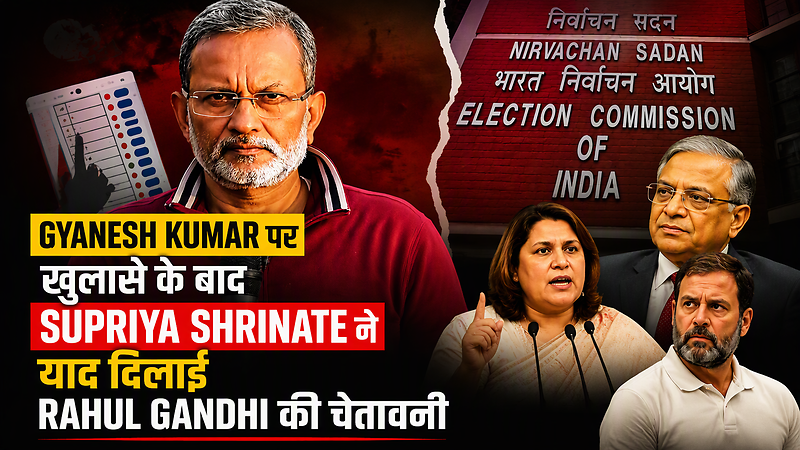
The ongoing debate surrounding Rahul Gandhi's recent warnings directed at the Election Commission of India (EC) has sparked a variety of opinions among content creators. While some view his statements as a necessary call for accountability, others perceive them as attempts to intimidate a constitutional institution.
Ajit Anjum, a prominent journalist, argues that Rahul Gandhi's focus on vote theft is crucial for democracy. He recalls Gandhi's warning from December 9, 2025, asserting that 'vote theft destroys democracy' and criticises the actions of the Election Commission, stating that they undermine the principles of 'one person, one vote' and universal adult franchise. Anjum stresses the importance of protecting the voting rights guaranteed by the Constitution, claiming that the actions of the Election Commission are systematically eroding these rights.
In contrast, Barkha Dutt from Mojo Story highlights the perceived laxity of the Election Commission officials. She suggests that their conduct may reflect a withdrawal from their responsibilities, which could lead to serious implications for the electoral process. However, her focus on the officials’ accountability seems less about intimidation and more about ensuring integrity within the institution.
Faye D'Souza shares a similar perspective to Anjum, asserting that Gandhi has called out the Election Commission for committing treason against the country. D'Souza emphasizes Gandhi's direct warnings to the officials, insisting that their actions are wrong and that they will face accountability in the future. This echoes Anjum's sentiment that the integrity of the electoral process is at stake.
Saurabh Shukla from The Red Mike reiterates D'Souza's points, reinforcing that Gandhi’s claims of treason are rooted in a broader context of accountability. Both creators argue that the Election Commission's actions pose a threat to the democratic fabric of the nation, aligning with Gandhi's urgent call for reform.
Najam Sethi, a political analyst, introduces a different angle by suggesting that the current regime in India is too strong for protests to lead to any meaningful change. He implies that Gandhi's calls for protest against the Election Commission may not yield the desired outcomes, as the government’s power structure remains intact. Sethi warns that unaddressed demands from the opposition could escalate into violence, further complicating the political landscape.
Conversely, Sanjay Dixit, a commentator, views the protests as politically motivated actions aimed at destabilizing the government rather than genuine calls for democratic reform. He accuses Gandhi of hijacking grassroots movements to further his political agenda, suggesting that the protests are not merely about accountability but about power acquisition.
The debate is multifaceted, with creators like Anjum, D'Souza, and Shukla advocating for accountability and transparency within the Election Commission, while others like Sethi and Dixit express skepticism about the effectiveness of protests and the underlying motives behind them. The discussion illustrates a broader concern about the integrity of democratic institutions in India and the varying interpretations of Gandhi's warnings as either a necessary call to action or an intimidation tactic against the Election Commission.