SAARC Revival: Cooperation or Contest for Influence?
Nov 3, 2026, 19:30 IST
Summary
The debate over SAARC's revival reveals a struggle for influence in South Asia. Qamar Cheema argues that Pakistan, along with Maldives and Bangladesh, is pushing for reactivation against Indian dominance. He critiques India's withdrawal and suggests that its approach may hinder cooperation. The dynamics reflect a complex interplay of ambitions and geopolitical maneuvering.
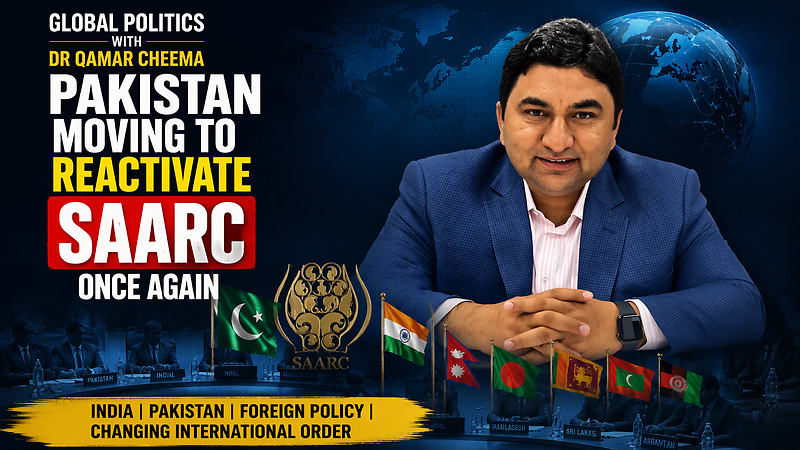
The debate surrounding the revival of the South Asian Association for Regional Cooperation (SAARC) highlights a complex interplay of regional ambitions and geopolitical maneuvering. Popular YouTuber Qamar Cheema argues that Pakistan is actively engaging with Maldives, Bangladesh, and Sri Lanka to push for SAARC's reactivation, suggesting that these nations are increasingly aligned against Indian dominance. In his video "Pakistan moving to reactivate SAARC once again," Cheema claims, "Maldives President Mohamed Muizzu supports reviving SAARC and holding its next summit," hinting at a potential shift in regional dynamics. He emphasizes that Pakistan may seek to host the next SAARC summit in Maldives, a move that could isolate India and strengthen ties among these nations.
Cheema also asserts that the previous dysfunctionality of SAARC stemmed from India's unilateral actions, particularly after the 2016 Uri attack, which he discusses in his video "Why is India opposing the revival of SAARC?" Here, he critiques India for its withdrawal from SAARC, arguing that it has since favored alternative regional platforms like BIMSTEC and Sagar to maintain its influence, stating, "India seeks regional dominance by preventing SAARC from becoming functional." This perspective underscores a broader concern that India's approach may hinder collaborative efforts in South Asia.
On the other hand, Cheema raises the question of India's motivations, noting that while Bangladesh and Maldives express support for SAARC, India has resisted these calls. He points out that, despite the aspirations of smaller nations, India appears intent on maintaining its hegemony in the region. In his video "The Maldives will never bow to Indian pressure," he elaborates on how Maldives is asserting its independence from Indian influence, suggesting that Pakistan's increasing engagement could further complicate India's regional strategy.
Moreover, Cheema's arguments highlight a critical tension in the region: while nations like Bangladesh and Maldives advocate for SAARC's revival, India’s reluctance reflects its desire to control the narrative and prevent Pakistan from gaining influence. This disagreement raises essential questions about the future of regional cooperation and whether SAARC can serve as a viable platform for collaboration or if it will remain a contested space dominated by power struggles.
Ultimately, the revival of SAARC represents more than just regional cooperation; it encapsulates the ongoing contest for influence in South Asia. The positions articulated by Cheema suggest that the path forward will be fraught with challenges, as nations navigate their relationships amid historical grievances and current geopolitical realities.