Shifting Sands: The Evolution of Hindu-Muslim Politics in Kashmir
Nov 1, 2026, 15:00 IST
Summary
Shubhankar Mishra explores the evolution of Hindu-Muslim politics in Kashmir, emphasizing the historical ties between communities and the impact of political events. He argues that many Kashmiri Muslims are descendants of Brahmins and critiques communal politics, while also reflecting on the pivotal changes since 1984 that shaped the region's trajectory. Mishra's perspectives challenge prevailing narratives and highlight the importance of unity.
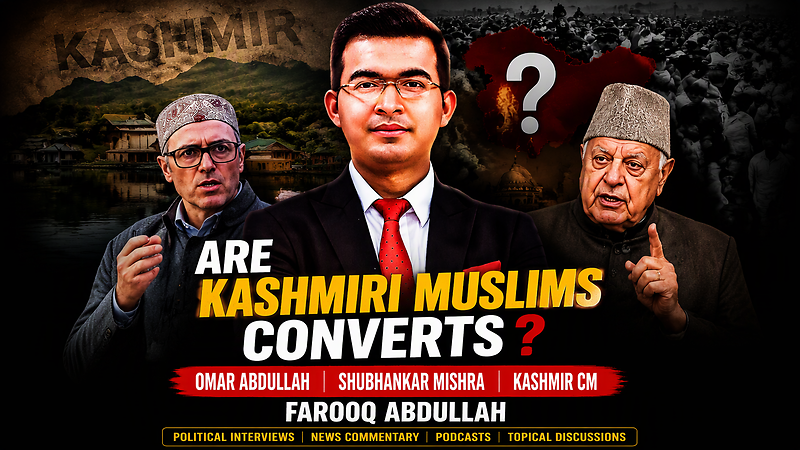
The political landscape of Kashmir, particularly the dynamics between Hindu and Muslim communities, has undergone significant changes over the years, with various voices contributing to the discussion. Popular YouTuber Shubhankar Mishra explores these shifts, particularly focusing on the historical and cultural roots of Kashmiri Muslims and the impact of political events.
In his video titled "Are Kashmiri Muslims Converts?", Mishra posits that many Kashmiri Muslims are descendants of Saraswat Brahmins who converted to Islam. He argues, "When everyone is of the same ancestry, why engage in Hindu-Muslim politics?" He emphasizes that the political narrative in Kashmir should not revolve around communal divisions but rather on the legacy of Sheikh Abdullah, who advocated for Hindu-Muslim-Sikh unity. Mishra highlights the Central Asian and Persian influences on Kashmiri culture, suggesting that these shared roots should foster a sense of unity rather than division.
Mishra takes a different angle in his video "कहाँ से बदला Kashmir?", where he reflects on the political changes initiated in 1984 after the fall of Farooq Abdullah’s government. He contends that this pivotal moment set the stage for the turbulent 1987 elections, which were marred by accusations of rigging and subsequent unrest. He recalls witnessing political allies vanish during tough times, stating, "I've seen people come and go during good and bad times since I was 14 years old." This personal account underscores his belief that political alliances have been fragile and influenced by the shifting tides of public sentiment and governance.
The contrast in Mishra’s perspectives highlights a complex narrative. While he acknowledges the historical connections that bind the communities, he also points to specific political events that altered Kashmir’s trajectory. His assertion that the roots of communal politics are less about identity and more about power dynamics suggests a nuanced understanding of the region's history.
The debate surrounding Kashmir's Hindu-Muslim politics is layered, with Mishra’s reflections prompting questions about identity, governance, and unity. His emphasis on Sheikh Abdullah’s legacy of unity serves as a counterpoint to the divisive politics that have emerged over the years, particularly since the late 20th century. By framing the discussion around cultural heritage and historical ties, Mishra invites a reconsideration of how identity politics has shaped the current landscape in Kashmir.
Ultimately, the evolving political narrative in Kashmir reflects broader tensions and complexities that continue to influence its future. The historical context provided by Mishra adds depth to the understanding of current dynamics, challenging the notion that communal identities are the sole drivers of political change. As Kashmir navigates its political future, the voices advocating for unity and understanding may become increasingly vital in shaping a more cohesive society.