SIR at One Year: Cleaning the Rolls or Erasing Voters?
Nov 1, 2026, 15:16 IST
Summary
The debate over India's Special Intensive Revision (SIR) of voter rolls reveals a split between those who see it as necessary for electoral integrity and those who argue it disenfranchises millions. Voices from Indian Express, The Wire, and YouTuber Dhruv Rathee raise concerns about transparency and constitutional rights, while some politicians defend the SIR as a necessary measure against electoral fraud.
The debate surrounding the Special Intensive Revision (SIR) of voter rolls in India has intensified, with stark divisions over whether it serves to clean up the electoral process or unjustly disenfranchise millions. Multiple voices contribute to this discussion, revealing a complex landscape of opinions and concerns.
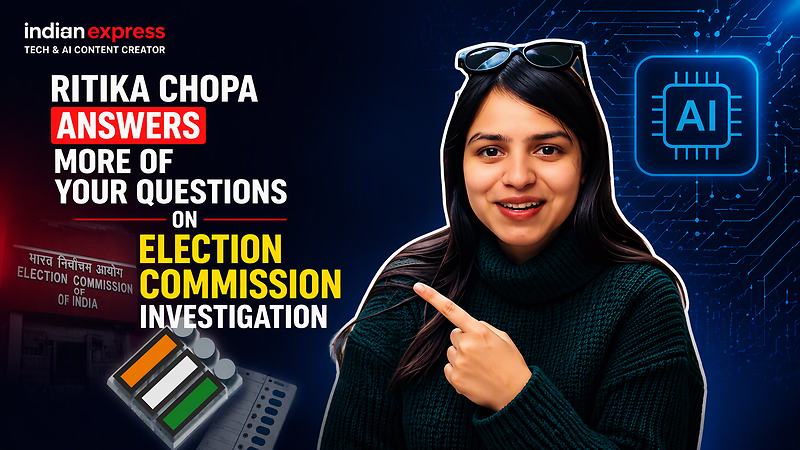
Ritika Chopa from Indian Express highlights a troubling instance in Goa, where 97 eligible voters were excluded from the SIR process. She points out that Chief Electoral Officer Sanjay Goyal confirmed these voters are being processed separately, but questions remain about why they were deleted for approximately seven months before any action was taken. Chopa states, "If everyone was so sincere about restoring them, why didn't it happen before?" This raises concerns about the integrity of the electoral roll management.
In contrast, another Indian Express source emphasizes that the SIR requires determination from the Election Commission and support from voters, suggesting that the process is not inherently flawed but dependent on public engagement.
Former Chief Election Commissioner SY Quraishi, speaking to The Wire, vehemently opposes the deletions, labeling them "sinister and mischievous." He argues that removing nearly 15% of India's population from voter lists through such an artificial process is unconstitutional, violating Article 326, which guarantees every eligible citizen the right to register as a voter. Quraishi asserts, "You cannot simply deprive citizens of their fundamental rights for procedural or bureaucratic reasons."
The Wire also reports that West Bengal alone excluded about 3.8 million voters, with reviews indicating that over 90% of those excluded were eligible. This deletion disproportionately affected marginalized groups, including minorities and women, raising alarms about systemic bias in the SIR process.
In a related vein, the Wire's coverage of the Supreme Court's response to these issues underscores a growing concern that the SIR process may be undermining democratic principles. Justice Ujjal Bhuyan noted that if citizens are deprived of their voting rights, they risk becoming second-class citizens. He emphasized that India's Constitution does not envision a hierarchy of citizens based on voting eligibility.
Dhruv Rathee, a popular YouTuber, echoes these sentiments, questioning the lack of transparency in the SIR process. He points out that while 6.5 million names were removed in Bihar, the identities of those voters were not disclosed until compelled by the Supreme Court, calling for accountability from the Election Commission.
The political ramifications of SIR are also evident in the protests led by various opposition parties, including Congress. Rahul Gandhi has petitioned the Supreme Court to halt the ongoing SIR process, demanding transparency and accountability regarding voter deletions. His rallying cry emphasizes the need for electoral integrity and has galvanized widespread public support.
Conversely, some politicians defend the SIR, arguing that it is necessary to maintain electoral integrity. Arjun Ram Meghwal from the BJP contends that previous revisions have been conducted without issue, implying that current criticisms reflect a double standard.
As protests continue across the country, the tension between safeguarding electoral integrity and ensuring voter rights remains palpable. Activists and citizens alike are questioning the motives behind the SIR, fearing it may be a tool for political exclusion rather than a legitimate effort to clean the electoral rolls. This ongoing discourse highlights the crucial intersection of democracy, citizenship, and the right to vote in India today.